
نانسي عجرم تصدح في بغداد

في أول حفل غنائي لها بالعاصمة العراقية

نانسي عجرم تتفاعل مع جمهورها في بغداد (مجمع نخيل بغداد الترفيهي)
TT

نانسي عجرم تصدح في بغداد

نانسي عجرم تتفاعل مع جمهورها في بغداد (مجمع نخيل بغداد الترفيهي)

حطت الفنانة اللبنانية نانسي عجرم في بغداد، أول من أمس، وأحيت مساءً، بمناسبة عيد الفطر، أول حفل غنائي لها في العاصمة العراقية، الذي أطربت خلاله الجمهور. وعبرت نانسي عجرم عن سعادتها وفرحتها بلقاء جمهورها العراقي.
ويأتي الحفل مؤشراً مهماً على مساحات الأمن التي تتمتع بها بغداد خلال هذا العيد. ولفت انتباه المراقبين عدم قيام «الجماعات المتشددة» بتعكير أجواء الحفل، مثلما حدث العام الماضي مع الفنان المصري محمد رمضان. ويتوقع أن يحضر إلى بغداد هذه الأيام كثير من المطربين والفنانين العرب لإحياء حفلات مماثلة.
وقال مهدي الشمري، مالك «مجمع نخيل بغداد الترفيهي»، الذي أُقيم فيه حفل المطربة نانسي عجرم لـ«الشرق الأوسط» إن «الحفل جاء في سياق مهرجان (عيدنا بغداد) الذي ترعاه قناة (يو تي) التلفزيونية، وتنظمه شركة (بابلون)، ويستمر لثلاثة أيام». وحسب الشمري كان مقرراً أن يشارك في حفل مساء أمس المطرب التونسي لطفي بوشناق، وعميد المقام العراقي حسين الأعظمي، ويأتي مساء اليوم دور المطرب اللبناني عاصي الحلاني والمطربة العراقية أصيل هميم.


مقالات ذات صلة

ستيف بركات لـ«الشرق الأوسط»: أصولي اللبنانية تتردّد أبداً في صدى موسيقاي

يوميات الشرق ستيف بركات لـ«الشرق الأوسط»: أصولي اللبنانية تتردّد أبداً في صدى موسيقاي

ستيف بركات لـ«الشرق الأوسط»: أصولي اللبنانية تتردّد أبداً في صدى موسيقاي

ستيف بركات عازف بيانو كندي من أصل لبناني، ينتج ويغنّي ويلحّن. لفحه حنين للجذور جرّه إلى إصدار مقطوعة «أرض الأجداد» (Motherland) أخيراً. فهو اكتشف لبنان في وقت لاحق من حياته، وينسب حبّه له إلى «خيارات مدروسة وواعية» متجذرة في رحلته.

فاطمة عبد الله (بيروت)
يوميات الشرق هشام خرما لـ«الشرق الأوسط»: أستلهمُ مؤلفاتي الموسيقية من التفاصيل

هشام خرما لـ«الشرق الأوسط»: أستلهمُ مؤلفاتي الموسيقية من التفاصيل

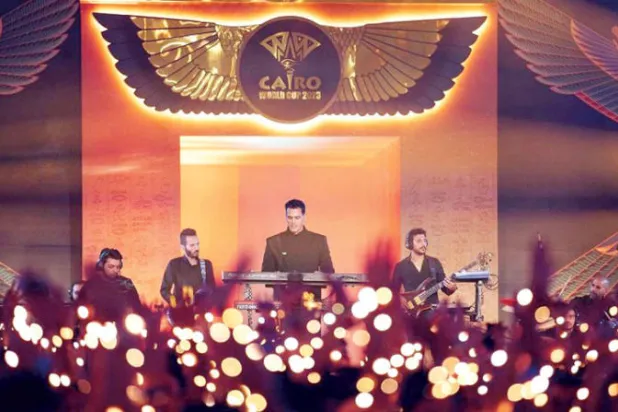
يعتمد الموسيقار المصري هشام خرما طريقة موحّدة لتأليف موسيقاه، تقتضي البحث في تفاصيل الموضوعات للخروج بـ«ثيمات» موسيقية مميزة. وهو يعتزّ بكونه أول موسيقار عربي يضع موسيقى خاصة لبطولة العالم للجمباز، حيث عُزفت مقطوعاته في حفل الافتتاح في القاهرة أخيراً.

محمود الرفاعي (القاهرة)
يوميات الشرق هشام خرما لـ«الشرق الأوسط»: أستلهم مؤلفاتي الموسيقية من التفاصيل

هشام خرما لـ«الشرق الأوسط»: أستلهم مؤلفاتي الموسيقية من التفاصيل

يعتمد الموسيقار المصري هشام خرما، طريقة موحدة لتأليف موسيقاه المتنوعة، وهي البحث في تفاصيل الموضوعات التي يتصدى لها، للخروج بثيمات موسيقية مميزة. ويعتز خرما بكونه أول موسيقار عربي يضع موسيقى خاصة لبطولة العالم للجمباز، التي تم افتتاحها في القاهرة أخيراً، حيث عُزفت مقطوعاته الموسيقية في حفل افتتاح البطولة. وكشف خرما تفاصيل تأليف مقطوعاته الموسيقية التي عُزفت في بطولة العالم للجمباز، إلى جانب الموسيقى التصويرية لفيلم «يوم 13»، الذي يجري عرضه حالياً في دور العرض المصرية. وقال خرما إنه يشعر بـ«الفخر» لاختياره لتمثيل مصر بتقديم موسيقى حفل افتتاح بطولة العالم للجمباز التي تشارك فيها 40 دولة من قارات

محمود الرفاعي (القاهرة)
يوميات الشرق للمرة الأولى... تسجيل مراسم تتويج الملك البريطاني في ألبوم

للمرة الأولى... تسجيل مراسم تتويج الملك البريطاني في ألبوم

تعتزم شركة تسجيلات بريطانية إصدار حفل تتويج ملك بريطانيا، الملك تشارلز الشهر المقبل، في صورة ألبوم، لتصبح المرة الأولى التي يتاح فيها تسجيلٌ لهذه المراسم التاريخية للجمهور في أنحاء العالم، وفقاً لوكالة «رويترز». وقالت شركة التسجيلات «ديكا ريكوردز»، في بيان اليوم (الجمعة)، إنها ستسجل المراسم المقرر إقامتها يوم السادس من مايو (أيار) في كنيسة وستمنستر، وأيضاً المقطوعات الموسيقية التي ستسبق التتويج، تحت عنوان «الألبوم الرسمي للتتويج»، وسيكون الألبوم متاحاً للبث على الإنترنت والتحميل في اليوم نفسه. وستصدر نسخة من الألبوم في الأسواق يوم 15 مايو.

«الشرق الأوسط» (لندن)
يوميات الشرق مزاد في سبتمبر على 1500 قطعة عائدة إلى المغني الراحل فريدي ميركوري

مزاد في سبتمبر على 1500 قطعة عائدة إلى المغني الراحل فريدي ميركوري

تُطرح للبيع في مزاد يقام في لندن خلال سبتمبر (أيلول) المقبل نحو 1500 قطعة عائدة إلى مغني فرقة «كوين» البريطانية الراحل فريدي ميركوري، من بينها أزياء ارتداها خلال حفلاته ومخطوطات لنصوص أغنيات، وكذلك لوحات لماتيس وبيكاسو، كما أعلنت دار «سوذبيز» اليوم الأربعاء. وستقام قبل المزاد معارض لأبرز هذه القطع في نيويورك ولوس أنجليس وهونغ كونغ في يونيو (حزيران)، ثم في لندن من 4 أغسطس (آب) إلى 5 سبتمبر (أيلول). ومن بين القطع التي يشملها المزاد تاج مستوحى من ذلك الذي يضعه ملوك بريطانيا في احتفالات تتويجهم، ورداء من الفرو الصناعي والمخمل الأحمر. وارتبطت هاتان القطعتان بصورة الفنان البريطاني الذي حقق شعبية واس

«الشرق الأوسط» (لندن)

وسط المفاوضات مع كندا... لماذا يتحدث ترمب عن خط أنابيب النفط «كيستون إكس إل»؟

مستودع إمداد يخدم خط أنابيب النفط «كيستون إكس إل» يبدو متوقفاً عن العمل في مقاطعة ألبرتا الكندية (أرشيفية - رويترز)
TT

وسط المفاوضات مع كندا... لماذا يتحدث ترمب عن خط أنابيب النفط «كيستون إكس إل»؟

مستودع إمداد يخدم خط أنابيب النفط «كيستون إكس إل» يبدو متوقفاً عن العمل في مقاطعة ألبرتا الكندية (أرشيفية - رويترز)

أثار منشور على وسائل التواصل الاجتماعي، يعلن فيه الرئيس الأميركي دونالد ترمب أن خط أنابيب النفط «كيستون إكس إل»، «قد يُبعث من جديد»، اهتماماً كبيراً، هذا الأسبوع، في خضم مفاوضات تجارية بين الولايات المتحدة وكندا.

وفيما يلي نظرة على تاريخ هذا المشروع الذي يمر عبر أجزاء من كندا والولايات المتحدة، بالإضافة إلى تفاصيل حول مقترح خط جديد لأنابيب النفط يتبع مساراً مختلفاً قليلاً:

ما هو «كيستون إكس إل»؟

وفق وكالة «رويترز» للأنباء، كان «كيستون إكس إل» مقترحاً لخط أنابيب نفط خام بطول نحو 1900 كيلومتر، وكان من المقرر أن ينقل 830 ألف برميل يومياً من الرمال النفطية في شمال ألبرتا في كندا إلى مركز التخزين الرئيسي في الولايات المتحدة بمدينة كاشينغ في ولاية أوكلاهوما، ثم إلى المصافي.

ويلقى هذا المشروع معارضة من عدد من الجماعات البيئية وجماعات السكان الأصليين، ورفضته إدارة الرئيس الأميركي الأسبق باراك أوباما، قبل أن يعيد ترمب إحياءه خلال ولايته الأولى. وعلى الرغم من بدء أعمال البناء، فلم يكتمل خط الأنابيب قط بعد أن ألغى الرئيس الأميركي السابق جو بايدن ترخيصاً أساسياً يخص الجزء الأميركي منه في 2021.

الرئيس ترمب أعلن إحياء مشروع خط أنابيب النفط «كيستون إكس إل» في منشور على وسائل التواصل الاجتماعي (تروث سوشيال)

ما الشركات المشاركة؟

تكبدت شركة «تي سي إنرجي» الكندية، التي تقف وراء مشروع «كيستون إكس إل»، خسائر بمليارات الدولارات عندما تم إلغاء خط الأنابيب. وقامت لاحقاً بفصل أعمالها المتعلقة بأنابيب النفط الخام إلى كيان جديد، هو شركة «ساوث بو»، حتى تتمكن من التركيز على الغاز الطبيعي بدلاً من ذلك.

لكن ترمب عبّر صراحة عن رغبته في رؤية توسعة الخط. وترسل كندا، رابع أكبر دولة مصدرة للنفط في العالم، أكثر من 90 في المائة من إنتاجها من النفط الخام إلى الولايات المتحدة، ويعتمد كثير من مصافي التكرير الأميركية على النفط الثقيل الكندي.

ورغم أن شركة «ساوث بو» قالت في الماضي إنها «تجاوزت» مشروع كيستون، فإن التوقعات بزيادة إنتاج النفط الكندي دفعت الشركة في وقت سابق من هذا العام إلى اقتراح مشروع خط أنابيب جديد يُسمى «برايري كونكتور».

ويمتد هذا المشروع، الذي تبلغ طاقته 550 ألف برميل يومياً، والذي تعمل شركة «ساوث بو» على تنفيذه بالشراكة مع شركة «بريدجر بايبلاين» الأميركية، من مقاطعة ألبرتا إلى ولاية وايومنج، وسيستخدم جزءاً من أنابيب خط «كيستون إكس إل» التي تم تركيبها على الجانب الكندي من الحدود قبل إلغاء ذلك المشروع.

وأعلنت «ساوث بو» أنها ستقرر في 2027 ما إذا كانت ستمضي قدماً في مشروع «برايري كونكتور» أم لا. وقال الرئيس التنفيذي للشركة إنه يحتاج إلى دليل على أن التصريح الرئاسي الأميركي «دائم» قبل المضي قدماً في المشروع. ورفضت شركة «ساوث بو» التعليق على المنشورات الأخيرة لترمب.

دور خط الأنابيب في المفاوضات التجارية

ذكرت وكالة «رويترز» أن رئيس الوزراء الكندي مارك كارني أثار احتمال إحياء المشروع خلال محادثات تجارية مع ترمب في أكتوبر (تشرين الأول) الماضي، مقدماً إياه باعتباره مجالاً محتملاً للتعاون بين البلدين. ثم توقفت المحادثات التجارية لأشهر.

ونشر ترمب صورة ساخرة عن «كيستون» بعد وقت قصير من إعلانه في وقت متأخر من مساء الثلاثاء أنه منح كندا مهلة ثلاثة أيام قبل فرض مزيد من الرسوم الجمركية.

ونشر الصورة الساخرة مجدداً قبيل موعد نهائي جديد عند منتصف الليل للتوصل إلى اتفاق.


Ghalibaf Urges Baghdad to Break Economic Dependence on Washington

 Iranian Parliament Speaker Mohammad Baqer Ghalibaf (R) attends a ceremony marking 40 days since the burial of Supreme Leader Ali Khamenei in Karbala, central Iraq, Aug. 20, 2026. (AFP)
Iranian Parliament Speaker Mohammad Baqer Ghalibaf (R) attends a ceremony marking 40 days since the burial of Supreme Leader Ali Khamenei in Karbala, central Iraq, Aug. 20, 2026. (AFP)
TT

Ghalibaf Urges Baghdad to Break Economic Dependence on Washington

 Iranian Parliament Speaker Mohammad Baqer Ghalibaf (R) attends a ceremony marking 40 days since the burial of Supreme Leader Ali Khamenei in Karbala, central Iraq, Aug. 20, 2026. (AFP)
Iranian Parliament Speaker Mohammad Baqer Ghalibaf (R) attends a ceremony marking 40 days since the burial of Supreme Leader Ali Khamenei in Karbala, central Iraq, Aug. 20, 2026. (AFP)

Iranian Parliament Speaker Mohammad Ghalibaf on Friday urged Baghdad to reduce its reliance on the dollar and draw up what he called a “precise roadmap” for economic cooperation between the two countries.

Ghalibaf made the remarks during a visit to the southwestern Iraqi city of Najaf, as the region awaits what has been described as an unprecedented package of US sanctions on Iran and its trading partners.

Iran must plan to overcome what Ghalibaf called “unjust sanctions,” after US Treasury Secretary Scott Bessent announced what he described as the toughest sanctions ever imposed on Iran, according to Reuters.

Earlier, at a consultative meeting with business figures at the Iranian embassy in Baghdad, Ghalibaf called for a “precise roadmap” for economic ties with Iraq that would include moving away from the US dollar.

He said the two countries should end their reliance on the US currency and use local currencies in trade.

“The era of US dominance over the world has ended, but we have not made proper use of the opportunities available to us, and we are still conducting trade through outdated methods,” Ghalibaf said.

Iraq relies entirely on the dollar for its oil exports, which generate more than 90% of national revenues. The proceeds are deposited in US dollars into an account held in the name of the Central Bank of Iraq at the Federal Reserve Bank of New York.

‘Difficult and trying circumstances’

In stark contrast, Iraqi Prime Minister Ali al-Zaidi sought to reassure public-sector employees and pensioners that monthly salaries and government payments were fully secured, even as he warned that Iraq was facing “difficult and trying circumstances” due to regional developments and disruptions to oil exports through the Strait of Hormuz.

Speaking at the Baghdad Dialogue conference, organized by the Iraqi Institute for Dialogue, al-Zaidi said Iraq faced major economic challenges and described the closure of the Strait of Hormuz as a key obstacle.

The strait, he said, “was not closed even during the harshest days of the blockade.”

Al-Zaidi said the government had found alternative routes for oil exports and activated border crossings to bolster trade, adding that the state had “more than one solution” to preserve economic stability and contain the fallout from the crisis.

He said Iraq was working to expand oil exports through Türkiye’s Ceyhan port, while efforts continued to develop export routes through Banias and Aqaba.

“We are working to increase Iraq’s export quota through OPEC, and we aim to reach 8 million to 10 million barrels per day within six years,” al-Zaidi said.

“Iraq fought ISIS on behalf of the region and the world, and it is only fair that it receive a crude oil export quota commensurate with the size of its population and its oil reserves.”

On the political front, al-Zaidi said political forces were in full agreement that the government should press ahead with its anti-corruption campaign.

He described “the battle against the looting of public funds” as a matter of honor for him.

The government launched an operation dubbed “Dawn Crackdown” on June 28 to combat the looting of public funds. The operation has targeted political officials, lawmakers, and businesspeople.


State Return to South Lebanon Extends Beyond Security to Services, Recovery

Lebanese Prime Minister Nawaf Salam during a visit to the Lebanese army in southern Lebanon, Aug. 21, 2026. (National News Agency)
TT

State Return to South Lebanon Extends Beyond Security to Services, Recovery

Lebanese Prime Minister Nawaf Salam during a visit to the Lebanese army in southern Lebanon, Aug. 21, 2026. (National News Agency)

Lebanon’s push to reassert the state’s presence in the south is moving beyond security deployments to a harder test: restoring schools, services, and livelihoods in communities battered by war.

Recovery programs are beginning to take shape, but a wide funding gap threatens efforts to keep residents in their towns and revive areas where infrastructure, agriculture, and education have sustained extensive damage.

A framework for return, but funding lags

In 2026, the government launched the “National Framework for Return, Early Recovery and Restoration of Basic Services,” covering the return of residents, social protection, the restoration of services and livelihoods, and preparations for reconstruction.

No consolidated budget has been announced yet.

One of its main financing tools is the Lebanon Emergency Assistance Project (LEAP), implemented by the Council for Development and Reconstruction.

The project was designed to scale up to $1 billion. So far, only $250 million has been secured, leaving a $750 million funding gap.

Of the available financing, $50 million is earmarked for immediate response measures, including debris removal, securing buildings, and reopening roads. Another $175 million is allocated to restoring water, energy, transport, health, and education services, while $15 million is set aside for studies and designs, and $10 million for project management.

Under the full framework, $455 million is allocated for reconstruction, most of it still unfunded.

In a parallel effort, the government launched a program in May worth about 32 million euros for southern Lebanon and the Bekaa, running through 2029.

The European Union is providing 24.8 million euros, Denmark 5.35 million euros, and the French Development Agency 2 million euros. The program targets local authorities, small businesses, and the agricultural sector, while seeking to create jobs.

Lebanese ministerial sources told Asharq Al-Awsat that “the new response framework provides a basis for attracting funding, but it is still not fully financed.”

They said the Ministry of Social Affairs was “continuing to work intensively to secure additional funding to help respond to the needs of affected groups.”

A safety net for more than one million people

Social protection is a central part of efforts to keep residents in their communities and support their return.

The sources said one of the main response measures was cash assistance provided by the Ministry of Social Affairs, covering about 230,000 families through the ministry’s shock-responsive social safety net.

Based on the average household size, more than 1 million people receive support.

The assistance is particularly significant in areas where returning home still depends on families' ability to repair their homes, restore access to services, and find work.

That makes social support part of the effort to re-establish communities, rather than simply an emergency measure.

Agriculture: getting farmers back to their land

The Ministry of Agriculture has divided its response plan into five tracks: emergency support for farmers; protection of food supply chains and markets; protection of livestock production and assets; continuity of programs and services; and coordination and needs assessment.

Measures include monitoring food supply chains, accelerating imports of plant products, extending import deadlines for some essential goods, and monitoring markets and prices in coordination with the Ministry of Economy.

The plan also provides emergency assistance to farmers in high-risk areas and steps up operations at ports, border crossings, quarantine centers, and laboratories to speed the entry of goods.

The report does not set an overall budget for the agricultural response.

Instead, it says the ministry is working with partners and donors to identify priorities, assess possible interventions, and secure resources.

Resources reported by the ministry’s network of agricultural partners that are being mobilized include $1,650,150 in cash assistance targeting 4,840 farmers.

In-kind assistance is expected to reach 1,850 farmers and includes solar-powered irrigation pump kits, agricultural inputs, animal feed, treatment support, and infrastructure.

The ministry has also launched a platform with the food security sector to identify and track available resources.

Schools face a September test

Education is emerging as one of the clearest tests of whether state institutions can resume normal operations in the South and Nabatieh governorates.

Sources at the Ministry of Education and Higher Education told Asharq Al-Awsat that the ministry aims to start the 2026-2027 academic year with in-person classes at schools that meet safety and readiness requirements, starting Sept. 15.

Schools in the affected areas of the South and Nabatieh will temporarily rely on remote learning until technical and operational assessments are completed.

The scale of the challenge is substantial.

Of 267 schools in the two governorates, 198 have been damaged. Eighty-nine sustained very minor damage, 64 moderate damage, and 15 severe damage. Another 30 were completely destroyed.

The ministry is using a “school cluster” model for planning, grouping schools and alternative learning spaces within the same geographical area.

Each cluster will have a file detailing student and teacher numbers, building conditions, capacity, and the locations of displaced students.

Students whose schools cannot reopen will remain enrolled in their original schools while temporarily attending a host school or alternative learning space.

Schools being used as shelters will operate under conditions designed to ensure the safe separation of their educational and shelter functions.

The ministry is also building an operational database to track schools and students and setting up a hotline.

Each school will receive an official operational decision specifying how classes will resume.

The ministry has also expanded its use of “Teaching Hubs,” or teaching and learning centers, aimed at restoring teachers’ roles in affected areas while providing students with places to receive support and continue their education.

The sources said the objective went beyond repairing damaged buildings.

“The goal is not limited to rehabilitating damaged school buildings, but also includes preserving the school as an existing institution even if its building has been destroyed, by maintaining its administration, teachers, and students,” they said.

That, they added, would ensure that each school retains its identity and educational role until it can be rehabilitated or rebuilt.