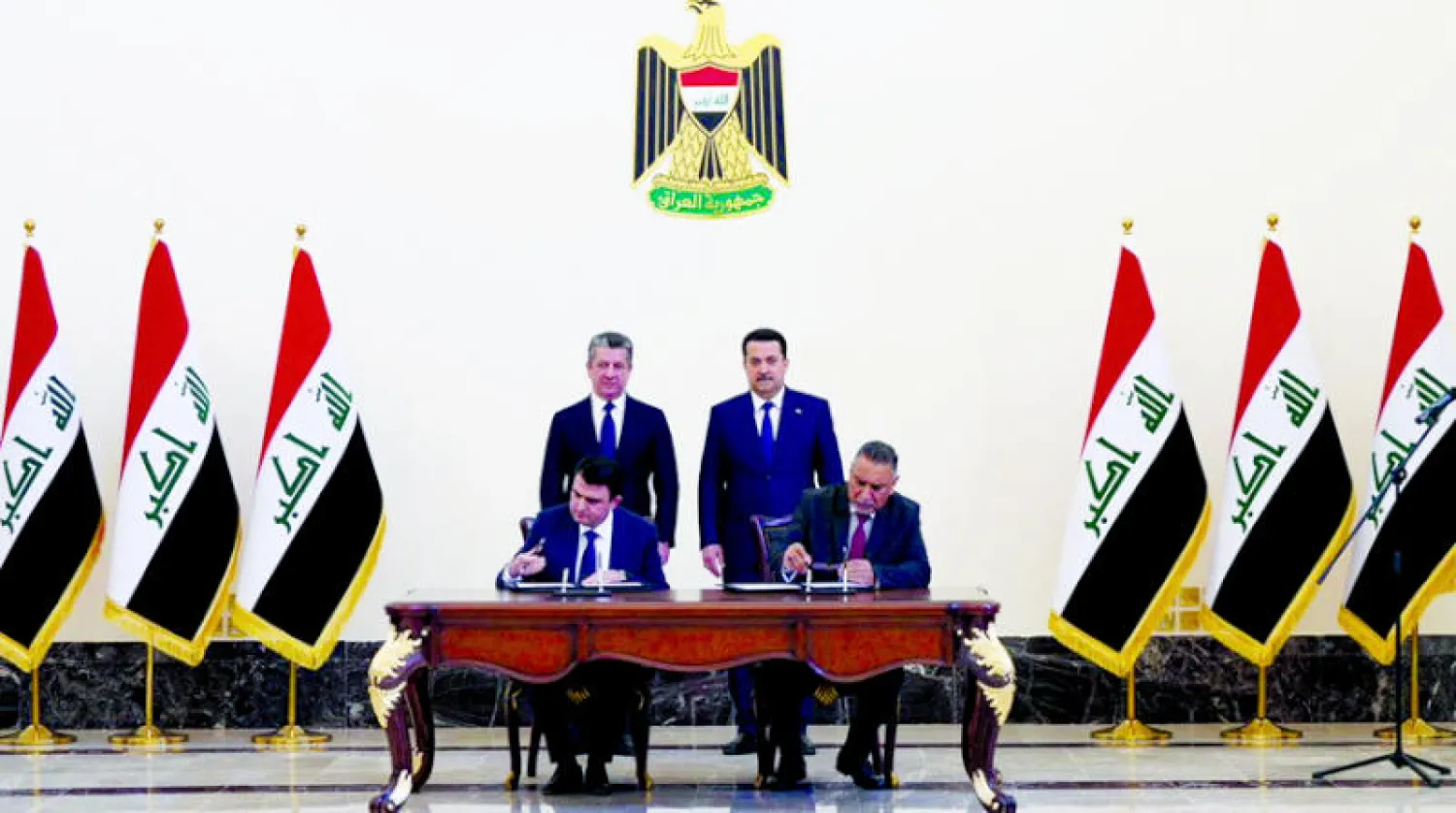
اتفاق لاستئناف تصدير نفط كردستان

بغداد وأربيل أكدتا أنه {مؤقت}

السوداني وبارزاني يرعيان توقيع الاتفاق في بغداد أمس (رويترز)
TT

اتفاق لاستئناف تصدير نفط كردستان

السوداني وبارزاني يرعيان توقيع الاتفاق في بغداد أمس (رويترز)

يُتوقَّع استئناف تصدير النفط من كردستان العراق عبر تركيا، وذلك بعدما وقَّع رئيس الوزراء العراقي محمد شياع السوداني مع رئيس وزراء إقليم كردستان العراق، مسرور بارزاني، أمس (الثلاثاء)، اتفاقاً على عودة تصدير نفط الإقليم عبر ميناء جيهان التركي، بعد أن بادرت أنقرة إلى إيقافه في 25 مارس (آذار) الماضي، عقب كسب بغداد لدعوى قضائية أقامتها ضد تركيا أمام هيئة التحكيم التابعة لغرفة التجارة الدولية. ويتوقع أن يفتح التوقيع الجديد أبواب التفاهم المشترك على مختلف القضايا الخلافية بين الجانبين؛ خصوصاً المتعلقة بتشريع قانون النفط والغاز المعطل منذ سنوات طويلة.
وقال السوداني، خلال مؤتمر صحافي عقده مع البارزاني بعد توقيع الاتفاق، إنَّ «أي تأخير بشأن عدم استئناف تصدير النفط سيؤثر بشكل واضح على الموازنة، وبالتالي سترتفع نسبة العجز». لكنه أشار إلى أنَّ استئناف التصدير «مؤقت».
وذكر أنَّ «توقف تصدير نفط كردستان فيه ضرر بالغ لكل العراقيين وعلى مجمل الإيرادات المثبتة في الموازنة الاتحادية، وليس على كردستان فقط، وهذا الاتفاق سيقلل من تلك المخاوف. وكان لا بدَّ من الاتفاق والوصول إلى هذا التفاهم والبدء في تنفيذه؛ حيث يقع على عاتق الجهات الفنية المباشرة بتنفيذه فوراً».
بدوره، أكد بارزاني أنَّ «الاتفاق يصب في مصلحة جميع العراقيين»، لافتاً إلى أنَّه اتفاق «مؤقت» لكن أسسه ستنعكس في قانوني الموازنة والنفط والغاز. وشدد بارزاني على أن «تنفيذ الاتفاق بشكل جيد يمكن أن يصبح أساساً يمكننا الاستفادة منه في صياغة قانون النفط والغاز».


«سافي» و«الاتصالات» تُحكمان الشركات لـ«سعودة» صناعة الألعاب الإلكترونية

أثناء مراسم توقيع الاتفاقية (إكس)
TT

«سافي» و«الاتصالات» تُحكمان الشركات لـ«سعودة» صناعة الألعاب الإلكترونية

أثناء مراسم توقيع الاتفاقية (إكس)

وقّعت مجموعة «سافي» للألعاب الإلكترونية مذكرة تفاهم مع وزارة الاتصالات وتقنية المعلومات، خلال فعاليات مؤتمر «ليب 2026» في الرياض؛ بهدف تطوير المواهب الوطنية ودعم الشركات الناشئة وفتح مسارات مهنية في صناعة الألعاب والرياضات الإلكترونية.

وتشمل المذكرة توسيع الوصول إلى البرامج الأكاديمية التابعة لـ«سافي» عبر الأكاديمية السعودية الرقمية، إلى جانب دمج حاضنتي «ناين 66» و«كود» ضمن برنامج جديد تحت اسم «كود - ناين 66»، بما يسهم في توسيع نطاق الدعم المقدم لرواد الأعمال وتعزيز فرص نمو شركاتهم.

وتأتي الشراكة في إطار جهود تطوير الكفاءات الوطنية في قطاع الألعاب والرياضات الإلكترونية، وتحويل الاهتمام بالألعاب مهاراتٍ ومساراتٍ مهنية وفرصاً لتأسيس شركات ناشئة واعدة، من خلال برامج تدريبية متخصصة وتكامل منظومة حاضنات الأعمال.

ويشارك في النسخة الخامسة من «ليب» أكثر من ألف متحدث وخبير عالمي، وأكثر من 1800 شركة تقنية، إلى جانب ما يزيد على 600 شركة ناشئة، وأكثر من 1900 مستثمر وممثل لصناديق الاستثمار الجريء. وتناقش النسخة الحالية أحدث التوجهات التي ترسم مستقبل التقنية، بما في ذلك الذكاء الاصطناعي والبنية التحتية السحابية والبيانات والأمن السيبراني والتقنية المالية والصحية والمدن الذكية والطاقة والمناخ والفضاء، إضافة إلى الألعاب والتقنية الرياضية والتجارة الرقمية.


Nepal Floods Expose Risks to Hydropower in a Warming Himalayas

An undated handout photo of rescue workers taking part in a rescue operation near the tunnel of the Trishuli 3A Hydropower Project, following deadly flash floods and mudslides, in Rasuwa, Nepal. (Nepal Army/Handout via Reuters)
TT

Nepal Floods Expose Risks to Hydropower in a Warming Himalayas

An undated handout photo of rescue workers taking part in a rescue operation near the tunnel of the Trishuli 3A Hydropower Project, following deadly flash floods and mudslides, in Rasuwa, Nepal. (Nepal Army/Handout via Reuters)

Workers shoveled thick mud from a flood-ravaged power station in central Nepal this week, trying to restore electricity to more than 20,000 people.

The floods that swept through Nepal and China, killing hundreds and leaving thousands missing, have also overrun hydropower facilities, knocking out about 10% of Nepal’s power capacity.

Once the immediate aftermath of the disaster is dealt with, the question will be how to restore power plants, roads, bridges, schools and health facilities without exposing them to the same vulnerabilities, disaster experts said.

“Authorities have to take a hard look in the mirror now and ask how they will be rebuilding in these places. They will also have to take a close look at other projects in Nepal that have not been built yet, whether they’ll be approved after this event,” said Jakob Steiner, a geoscientist at the University of Graz in Austria, who is currently based in Dhaka, Bangladesh.

Rebuilding for resilience, not just replacement Hydropower projects that were operating or under construction were fully or partly destroyed across Rasuwa, Nuwakot and Dhading, among the worst-hit districts.

Hundreds of workers in Nepal are unaccounted for from a dozen hydropower projects, according to the Independent Power Producers’ Association, Nepal. Many had taken shelter in the tunnels but are stuck, waiting to be rescued, according to officials.

“The tunnels are built to access hydropower infrastructure and to divert water,” Steiner said, describing the tunnels as big enough for trucks to pass through.

Apart from the hydropower projects, tens of kilometers of roads, multiple bridges and essential buildings like schools and hospitals have been destroyed.

Ramraj Narasimhan, a senior director with the Coalition for Disaster Resilient Infrastructure, said rebuilding should focus on continuity of services rather than trying to make every structure indestructible.

“If it gets damaged, let it get damaged, but can we build in redundancy in the system?” he said.

That can mean choosing a better location for construction, alternate routes, backup power, improved early warning and financial tools such as insurance to speed recovery, Narasimhan said. Risk assessments should examine where a river bends, where slopes are unstable and where a single failure could cut off several communities.

Narasimhan’s organization estimates that $124 billion worth of Nepal’s infrastructure is exposed to climate-driven disasters, creating the potential for hundreds of millions of dollars in losses each year. A report by the coalition earlier this year found that Nepal’s average annual losses are nearly $760 million from various disasters, while the country’s national disaster funds is only a fraction of this amount.

Climate risks grow for Himalayan hydropower

Climate scientists said the Himalayan region, which is warming faster than many other parts of the world, is particularly at risk from increasing global warming as a result of human-caused climate change.

Climate experts said the flooding adds to evidence that infrastructure planning in the Himalayas should account for disasters that are increasing as the climate warms. Glaciers across the Hindu Kush Himalaya are losing ice at an accelerating rate, while permafrost degradation, unstable slopes, glacial lakes and increasingly erratic rainfall are raising the risks of floods, landslides and debris flows, according to reports by Kathmandu-based climate research group International Center for Integrated Mountain Development.

The stakes are particularly high for Nepal because hydropower is both a foundation of its electricity grid and an important source of economic growth and export revenue. Much of the country’s potential is run-of-river hydropower, Narasimhan said, meaning facilities are closely tied to steep river corridors where land is limited and hazards can cascade quickly.

Steiner said smaller floods can sometimes be managed with diversions that keep debris and high flows away from expensive infrastructure and tunnels. But for events as large as the latest flood, he said, physical defenses may be overwhelmed. In those cases, early warning becomes the critical protection for people.

He said the flood was detected at the China-Nepal border after moving rapidly from its source, leaving little warning time upstream. But there was still time as the flood traveled downstream toward hydropower sites, raising questions about whether warnings could have reached workers sooner.

The disaster is also likely to intensify scrutiny of where future projects are approved. Himanshu Thakkar, coordinator of the South Asia Network on Dams, Rivers and People, said environmental, social and disaster-risk assessments need to reflect the specific landscape and past hazards of each valley, backed by land-use rules and stronger accountability.

Hydropower projects can themselves become “force multipliers” when large structures, debris and altered river channels add to downstream damage, Thakkar said. He argued that Nepal should also consider more decentralized solar power as part of a broader energy mix.

Thakkar said the question now is not only how fast Nepal can rebuild, but what it chooses to put back in the path of the next flood.


إصابة سفينة بـ3 «مقذوفات غير محددة» في مضيق هرمز

سفن بالقرب من مضيق هرمز كما تُرى من مسندم - عُمان الاثنين (رويترز)
TT

إصابة سفينة بـ3 «مقذوفات غير محددة» في مضيق هرمز

سفن بالقرب من مضيق هرمز كما تُرى من مسندم - عُمان الاثنين (رويترز)

أعلنت هيئة عمليات التجارة البحرية البريطانية ليل الاثنين إصابة سفينة بثلاثة «مقذوفات غير محددة» في حين كانت تعبر مضيق هرمز؛ ما تسبب باندلاع حريق على متنها.

وأغلقت إيران مضيق هرمز عملياً منذ اندلاع الحرب مع أولى الضربات الأميركية - الإسرائيلية عليها أواخر فبراير (شباط)، وتسعى لفرض رسوم على العبور، وتهاجم سفناً تتهمها بمحاولة الالتفاف على مسار حددته.

ورداً على ذلك، فرضت واشنطن حصاراً على موانئ إيران، وفقاً لما ذكرته «وكالة الصحافة الفرنسية».

وأفادت هيئة عمليات التجارة البحرية البريطانية عبر منصة «إكس» بأن ناقلة «تعرضت للإصابة بثلاثة مقذوفات غير محددة أثناء خروجها من مضيق هرمز»، مشيرة إلى أن الحادثة وقعت على مسافة 17 ميلاً بحرياً (31 كيلومتراً) شرق مدينة خصب العُمانية.

وأوضحت أنه «لم تسجّل أي إصابات بشرية أو أضرار بيئية».

وحدَّدت شركة الأمن البحري البريطانية «فانغارد» لاحقاً السفينة على أنها «سينيغال بروسبيريتي» التي ترفع علم ليبيريا.

وأضافت: «أصابت الصواريخ الجانب الأيسر وغرفة المحرك وخزان الصابورة في السفينة؛ ما أدى إلى انقطاع الاتصالات»، مؤكدة أن الطاقم بخير.

وأفضت الجهود الدبلوماسية إلى وقف لإطلاق النار في أبريل (نيسان)، تلاه في منتصف يونيو (حزيران) توقيع مذكرة تفاهم بين واشنطن وطهران كان يفترض أن تمهّد لمباحثات بهدف التوصل إلى اتفاق نهائي، لكنها انهارت مع استئناف الطرفين الأعمال الحربية لفترة وجيزة في مطلع يوليو (تموز)، في حين أعلنت واشنطن أخيراً «حرباً اقتصادية لم يسبق لها مثيل» على طهران.