

سلوفاكيا تهدد بوقف إمدادات الكهرباء الطارئة لأوكرانيا

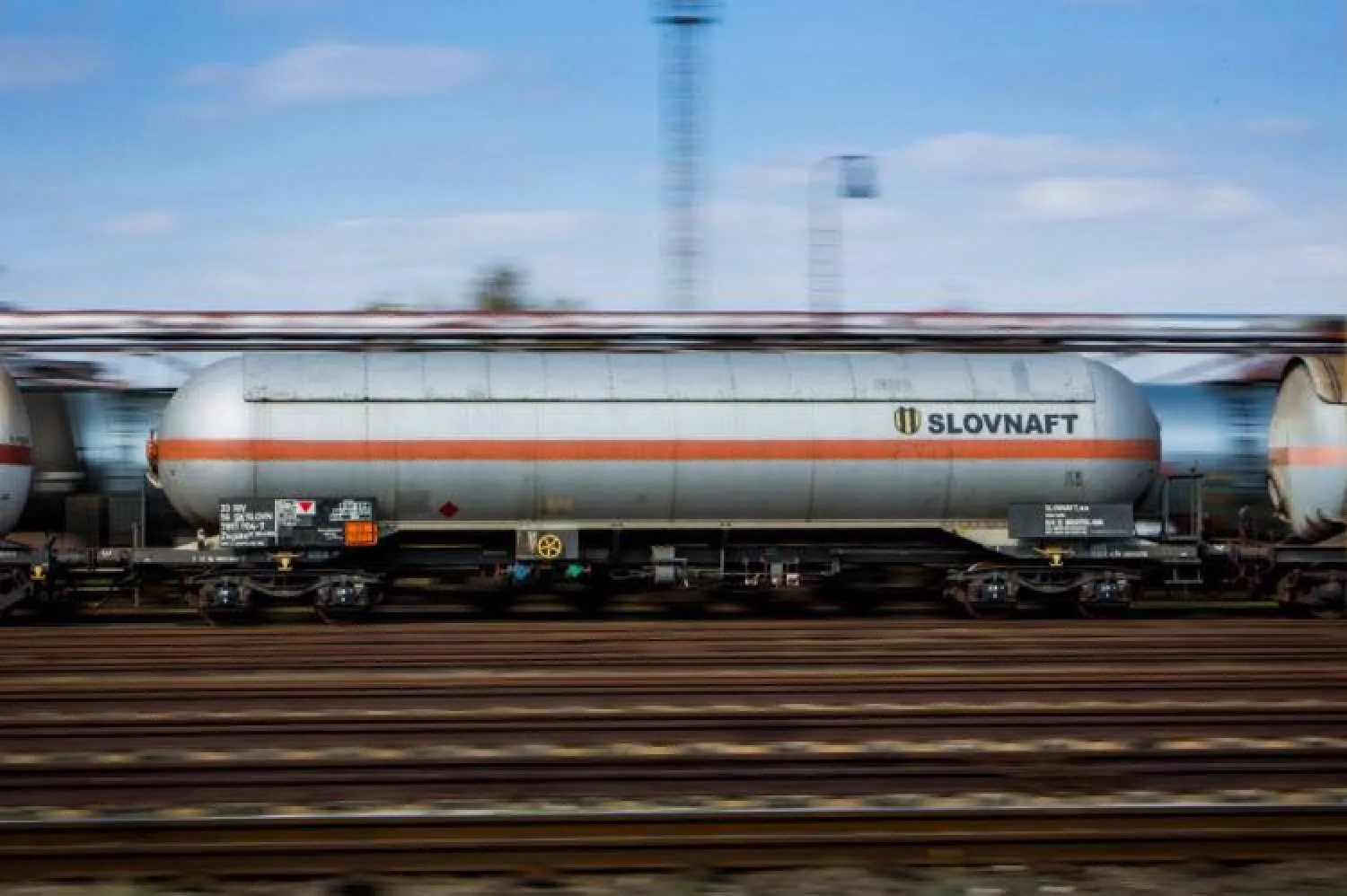
طلبت «سلوفنافت» 7 ناقلات تحمل نفطاً ‌من السعودية ‌والنرويج وكازاخستان وليبيا ⁠في ظل انقطاع إمدادات النفط الروسي عبر خط «دروغبا» (شركة سلوفنافت)
TT

سلوفاكيا تهدد بوقف إمدادات الكهرباء الطارئة لأوكرانيا

طلبت «سلوفنافت» 7 ناقلات تحمل نفطاً ‌من السعودية ‌والنرويج وكازاخستان وليبيا ⁠في ظل انقطاع إمدادات النفط الروسي عبر خط «دروغبا» (شركة سلوفنافت)

هدد رئيس وزراء سلوفاكيا روبرت فيتسو، السبت، بوقف إمدادات الكهرباء الطارئة إلى أوكرانيا، إذا لم تستأنف كييف في غضون يومين ضخ إمدادات النفط الروسية التي تمر عبر الأراضي الأوكرانية إلى بلاده والمتوقفة منذ شهر تقريباً.

وسلوفاكيا والمجر هما الدولتان الوحيدتان في الاتحاد الأوروبي اللتان لا تزالان تعتمدان على كميات كبيرة من النفط الروسي المشحون عبر خط الأنابيب «دروغبا» الذي يمر من أوكرانيا، ويعود إلى الحقبة السوفياتية. ولدى كل من البلدين قيادة تحافظ على علاقات وثيقة مع موسكو، على خلاف الإجماع الأوروبي المؤيد لأوكرانيا إلى حد بعيد.

وإمدادات النفط الروسي عبر خط الأنابيب «دروغبا» الرئيسي مقطوعة منذ 27 يناير (كانون الثاني)، عندما قالت كييف إن طائرة روسية مُسيَّرة ضربت معدات تخص خط الأنابيب في غرب أوكرانيا. وصارت سلوفاكيا والمجر أكثر صراحة في الأيام القليلة الماضية في المطالبة باستئناف الإمدادات.

وسلوفاكيا مصدر رئيسي للكهرباء الأوروبية لأوكرانيا التي تحتاج إليها بعد أن ألحقت الهجمات الروسية أضراراً بشبكتها الكهربائية. ويقول خبراء قطاع الطاقة إن سلوفاكيا وفرت 18 في المائة من واردات أوكرانيا القياسية من الكهرباء الشهر الماضي.

واقترحت أوكرانيا طرق عبور بديلة لشحن النفط إلى أوروبا، خلال إجراء أعمال الإصلاح الطارئة للأنابيب. وفي رسالة نقلتها «رويترز»، اقترحت البعثة الأوكرانية لدى الاتحاد الأوروبي شحن النفط عبر نظام نقل النفط الأوكراني أو طريق بحري، قد يشمل خط أنابيب «أوديسا- برودي» الذي يربط ميناء أوكرانيا الرئيسي المطل على البحر الأسود بالاتحاد الأوروبي.

وقالت البعثة: «تكرر أوكرانيا باستمرار استعدادها المستمر لضمان نقل النفط في الإطار القانوني المتاح».

وكان غابرييل سابو، الرئيس التنفيذي ​لشركة التكرير السلوفاكية «سلوفنافت»، قد قال الأربعاء، إن الشركة طلبت 7 ناقلات تحمل نفطاً ‌من السعودية ‌والنرويج ​وكازاخستان وليبيا، ‌لنقله ⁠إلى ​ميناء كرواتي ⁠في ظل انقطاع إمدادات النفط الخام الروسي عبر خط أنابيب «دروغبا».

وأضاف ‌أن ‌الإمدادات ​ستسمح ‌لشركة «سلوفنافت» -وهي وحدة ‌تابعة لشركة «إم أو إل» المجرية- بالعودة إلى ‌التشغيل الكامل بدءاً من أبريل (نيسان)، بعد ⁠معالجة ⁠النفط الذي تم سحبه من الاحتياطيات السلوفاكية، بدءاً من النصف الثاني من الأسبوع المقبل، بمعدل إنتاج يومي مخفض.

وتقدمت سلوفاكيا والمجر إلى «المفوضية الأوروبية» بطلب لتطبيق قاعدة تسمح لهما بشراء النفط الروسي بحراً، في حال تعذُّر نقله عبر خطوط الأنابيب، وفق ما صرَّح به وزير الخارجية المجري بيتر سيارتو، في بيان، الأربعاء.
مقالات ذات صلة

«هرمز» شبه متوقف... تراجع حاد في عبور السفن بعد هجمات الناقلات

الاقتصاد سفن قرب مضيق هرمز كما تُرى من مسندم بعُمان (أرشيفية-رويترز)

«هرمز» شبه متوقف... تراجع حاد في عبور السفن بعد هجمات الناقلات

تباطأت حركة الملاحة عبر مضيق هرمز، خلال عطلة نهاية الأسبوع، وفق بيانات صدرت يوم الاثنين، عقب هجمات استهدفت ناقلات.

«الشرق الأوسط» (لندن)
الاقتصاد رجل ينظر إلى مؤشرات السوق على لوحة أسعار الأسهم خارج شركة وساطة في طوكيو (رويترز)

الأسواق الآسيوية تلتقط الأنفاس وسط غموض الحرب وأسعار النفط

تحركت الأسهم الآسيوية عرضياً يوم الاثنين، بينما راقب المستثمرون بحذر أسعار النفط التي سجَّلت مكاسب كبيرة الأسبوع الماضي.

«الشرق الأوسط» (طوكيو)
الاقتصاد خزانات للنفط في قاعدة نقل الديزل تابعة لشركة «إكسون موبيل» في وينك. تكساس (أ.ف.ب)

النفط يرتفع مع تعثُّر المسار الأميركي - الإيراني وتباطؤ حركة «هرمز»

ارتفعت أسعار النفط يوم الاثنين، مع تراجع التوقعات بشأن تحقيق انفراجة في محادثات السلام بين الولايات المتحدة وإيران.

«الشرق الأوسط» (سنغافورة)
الاقتصاد موظف يسير داخل مبنى مصفاة لتكرير النفط في فادينار بولاية غوجارات الغربية بالهند (رويترز)

الهند تستعد لزيادة كبيرة في إنتاج الغاز مع استمرار حرب إيران

أصدرت الهند توجيهات إلى شركاتها الحكومية ومصافيها الخاصة للاستعداد لزيادة حادة في إنتاج غاز الطهي؛ سعياً لتعزيز الإمدادات المحلية، مع استمرار حرب إيران.

«الشرق الأوسط» (نيودلهي)
الاقتصاد مقر البنك المركزي المصري بوسط القاهرة (تصوير: عبد الفتاح فرج)

«مورغان ستانلي» يوصي بالاستثمار في أذون الخزانة المصرية أجل 6 أشهر

أوصى بنك مورغان ستانلي المستثمرين الأجانب بالدخول في أذون الخزانة المصرية، خاصة أجل 6 أشهر.

«الشرق الأوسط» (القاهرة)

Erdogan Plans Syria Visit, Reaffirms Türkiye’s Support for Stability

Turkish President Recep Tayyip Erdogan receives Syrian President Ahmed al-Sharaa during his first visit to Türkiye in February 2025. (Turkish Presidency)
TT

Erdogan Plans Syria Visit, Reaffirms Türkiye’s Support for Stability

Turkish President Recep Tayyip Erdogan receives Syrian President Ahmed al-Sharaa during his first visit to Türkiye in February 2025. (Turkish Presidency)

Turkish President Recep Tayyip Erdogan plans to visit Syria soon, reviving a trip initially scheduled for April but postponed after the outbreak of the Iran war in February.

Erdogan pledged that Türkiye would do everything possible to bolster stability in its neighbor, stressing that Syria “will not be alone,” according to excerpts from a television interview carried by Turkish media on Sunday.

He predicted that Syrian Kurds would play a role in peace and stability and pledged to strengthen Türkiye’s ties with Kurdish communities across the region.

Erdogan also cited parliament’s approval of legislation on “Strengthening National Solidarity and Social Integration,” known as the “framework law,” allowing members of the Kurdistan Workers’ Party (PKK) to return and reintegrate into Turkish society as part of the “Terror-Free Türkiye” process.

The Kurdish side calls the initiative the “Peace and Democratic Society Process,” centered on the PKK’s dissolution and disarmament, along with affiliated groups.

SDF integration

Erdogan’s remarks coincided with comments attributed by the pro-government Türkiye newspaper to Mahmoud Berkhedan, a Syrian Democratic Forces (SDF) commander in Ain al-Arab, or Kobani.

Berkhedan praised Erdogan and his ally, Nationalist Movement Party (MHP) leader Devlet Bahceli, for their role in Türkiye’s new peace process.

According to Berkhedan, 99% of outstanding issues over military integration with Damascus have been resolved, with some 10,000 to 12,000 members of the Kurdish People’s Protection Units (YPG), the main component of the SDF, integrated into the Syrian army.

He added that the YPG would be dissolved within days and the Autonomous Administration structure in northern and northeastern Syria would disappear.

“We have buried our weapons and are not demanding an independent state,” Berkhedan declared. “There is no turning back. We will participate side by side in building a new Syria within one army, one state, one flag and a shared homeland.”

Military integration is nearly complete, he added, though the status of the Women’s Protection Units (YPJ) and Turkish nationals serving in the Kurdish forces remains unresolved.

Syria trip

Turkish Ambassador to Damascus Nuh Yilmaz revealed Friday that Erdogan had been considering a visit around April 21, but the Iran war and closure of airspace prevented it.

The date had not been finalized before regional developments intervened, Yilmaz explained, but the trip remains planned and will be announced by the Turkish presidency once arrangements are complete.

He expects Erdogan to visit before the end of the year.

Erdogan last traveled to Damascus in January 2011, when he was Türkiye’s prime minister, about two months before the Syrian uprising and the subsequent rupture in diplomatic relations over Ankara’s opposition to the Assad government’s crackdown on protests.

Syrian President Ahmed al-Sharaa has made four visits to Türkiye since the fall of the Assad regime in December 2024, while exchanges between senior officials have increased and political, economic, security and defense ties have deepened.

Yilmaz noted that four strategic security threats along Türkiye’s border — human smuggling, drug trafficking, irregular migration and terrorism — had disappeared since the collapse of the regime.

Trade between the two countries has also risen 40% to $3.75 billion, with a medium-term target of $10 billion. Talks are continuing on a free-trade agreement, joint industrial zones and opening all crossings along the more than 900-kilometer border.

Türkiye’s foreign and interior ministries are also working on new visa arrangements to make it easier for Syrians who have returned home to visit Türkiye, according to Yilmaz.


In Spain's Ceuta, Hundreds of Migrants Stage Protest and Demand Asylum

TOPSHOT - Migrants pose for a picture while being escorted to the Ceuta-Morocco border in the Spanish North African enclave of Ceuta on August 1, 2026. (Photo by Henry NICHOLLS / AFP)
TT

In Spain's Ceuta, Hundreds of Migrants Stage Protest and Demand Asylum

TOPSHOT - Migrants pose for a picture while being escorted to the Ceuta-Morocco border in the Spanish North African enclave of Ceuta on August 1, 2026. (Photo by Henry NICHOLLS / AFP)

Hundreds of migrants ‌who recently entered Spain's North African enclave of Ceuta staged a protest on a popular urban beach on Sunday, urging Spanish authorities to grant them asylum instead of sending them back to Morocco.

They were among the estimated 5,000 to 8,000 who remain in Ceuta after the mass border crossing two weeks ago that saw over 72,000 people surge into the tiny territory of about 80,000. The vast majority returned voluntarily in the following days.

With the city's resources overstretched, most migrants were living in precarious conditions on El Trampolin beach or the city's outskirts while awaiting a chance to journey on to continental Europe.

"We're sleeping next to the sea, with cold and bad smells. We're suffering a lot," said Ayoub Elarroud from Morocco's Tetouan, adding that police were blocking migrants from going to the city center.

The protesters held up ‌Spanish flags and ‌banners reading "We don't want to go back to Morocco" and "We are also ‌human", ⁠while chanting slogans such ⁠as "We're tired" or "We need a solution". On the rocky shores behind them, some migrants washed their clothes while others fished with makeshift bamboo rods.

Earlier this week, Interior Minister Fernando Grande-Marlaska said migrants who had entered irregularly would not be allowed to stay in the enclave, travel to mainland Spain or obtain legal status, except in rare cases involving extreme vulnerability.

HEALTH SERVICES UNDER PRESSURE

The head of Ceuta's medical board, Enrique Roviralta, told Onda Cero radio that the city's limited healthcare workers were exhausted and criticized what he described as ⁠a slow response by the central government.

Roviralta added that diseases such as ‌infectious diarrhea and scabies were breaking out, and violence-related injuries such ‌as broken noses or stab wounds were rising.

On Sunday, Health Minister Monica Garcia rejected suggestions that local health ‌services had "collapsed", but acknowledged they were under pressure.

"To associate migration with illness is unjust and xenophobic," ‌she told reporters in Ceuta, adding there was a moderate risk of epidemic outbreaks for migrants and a low one for residents.

Most of the Moroccan migrants interviewed by Reuters said they were driven by poor working conditions in their country, despite many holding higher qualifications.

Mohammed Ouanzar, a 39-year-old automation specialist from Fez, said average monthly salaries of ‌3,000 dirham ($324) made it impossible for him to buy a home or start a family.

"Once I reached Spanish soil, I felt like I ⁠was born again," he ⁠said. "I'd rather die than return."

Hicham Chikir, 25, said most people were eager to work in Europe. "If anyone is bad, the police can send them back," he added.

REFUGEES EXHAUSTED

Emmanuel, a 30-year-old electrician who fled conflict-ridden northeastern Nigeria, said he decided to embark on a perilous four-month journey across Niger, Algeria and Morocco because his children had stopped going to school over fears of being kidnapped.

"I'm fighting for a better life for them," he said, adding that he would take any job he was offered.

Mohammad Ismail Hossain, 34, left Bangladesh over two years ago following the 2024 mass uprising. He traversed India, Pakistan, Iraq, Syria, Egypt, Libya and Algeria - mostly on foot - and saw many companions die of thirst in the desert.

Ousmane from southern Senegal said he was seeking asylum because he suffered persecution over his sexual orientation but had yet to obtain a reply from the local NGOs he had contacted.

"The worst thing is waiting all day with nothing to do, checking my emails constantly" he said.


Did the US Give Israel a Green Light to Seize Lebanon's Ali al-Taher?

 The Ali al-Taher heights, overlooking destruction in the southern Lebanese town of Kfar Tebnit. (Asharq Al-Awsat)
The Ali al-Taher heights, overlooking destruction in the southern Lebanese town of Kfar Tebnit. (Asharq Al-Awsat)
TT

Did the US Give Israel a Green Light to Seize Lebanon's Ali al-Taher?

 The Ali al-Taher heights, overlooking destruction in the southern Lebanese town of Kfar Tebnit. (Asharq Al-Awsat)
The Ali al-Taher heights, overlooking destruction in the southern Lebanese town of Kfar Tebnit. (Asharq Al-Awsat)

Political sources in Tel Aviv said Israel’s escalation in South Lebanon over the past three days has Washington's understanding, provided it does not reignite the war and is accompanied by steps to advance US-sponsored negotiations between the Lebanese and Israeli governments.

The sources noted that the US understands Israel’s response because Hezbollah has continued operations that killed two Israeli soldiers and seriously wounded three others in a drone attack in the Ali al-Taher area.

The Israeli military subsequently launched intensive airstrikes and shelling across numerous areas it claimed were linked to Hezbollah, killing several civilians, including children.

Israel’s Maariv newspaper reported that political sources said the US had given Israel a “green light,” while Haaretz cited political sources as saying the American administration had expressed understanding for Israeli operations but asked Tel Aviv to take diplomatic steps to help advance negotiations with Beirut and exercise restraint on other fronts.

According to the Israeli account, the fierce battle over the Ali al-Taher hills is driven not only by their commanding position over the Nabatieh area, a Hezbollah stronghold, but also by a large underground tunnel complex with eight entrances that Israel describes as Hezbollah’s southern “Kirya.”

The Kirya is the name of the Israeli military headquarters complex in Tel Aviv, which also houses the Defense Ministry and an underground command center.

Israel claims that more than 40 senior Hezbollah operatives were initially trapped in the underground complex and have been encircled for two months.

Their number has since fallen to about 15, according to the Israeli assessment. Israel believes some are officers and trainers from Iran’s Revolutionary Guard Corps and wants to expose their presence publicly.

Israeli Prime Minister Benjamin Netanyahu hopes their surrender could provide an image of victory over Hezbollah. Israel is demanding that those still inside emerge either in surrender or be killed.

Hezbollah, meanwhile, is seeking to thwart the Israeli plan and exact a heavy price from the military, using explosive-laden drones, planted explosives and clashes.

Each Israeli casualty has increased pressure on Netanyahu and military commanders, prompting heavier strikes on Lebanese homes and neighborhoods.

For Netanyahu, the mounting losses also carry political costs as he faces a difficult election battle. They undermine his claim to have achieved the war’s objectives of dismantling and disarming Hezbollah, which Israel says is regrouping and rebuilding its capabilities. The elections are set for October.

A wide gap nevertheless remains between Washington and Tel Aviv over diplomacy.

The US administration believes the most effective blow against Hezbollah would be a political agreement with Lebanon and progress toward a peace treaty.

Washington views Israel’s emphasis on military action as benefiting Hezbollah and its Iranian backers by weakening the Lebanese government and state.

Iran has threatened in recent days to intervene if Israel continues operations in Ali al-Taher. The warning has made the Israeli military cautious about launching a ground assault on the underground command center.

Instead, it has maintained fire around the complex’s eight entrances, seeking to prevent those trapped inside from escaping and block reinforcements or relief, while cutting off water and electricity.

Israel’s public broadcaster Kan cited a source close to US Lt. Gen. Joseph Clearfield, who heads the committee overseeing the ceasefire agreement between Israel and Hezbollah, as saying Israel could seize the Ali al-Taher area and expand its military operations if Hezbollah does not halt its attacks.

Israeli Defense Minister Israel Katz said Tel Aviv would leave “no score unsettled” on any front and would defend its soldiers and citizens, amid reports of preparations for more strikes.

National Security Minister Itamar Ben-Gvir called for a broader military escalation against Lebanon, saying Israel should do more than simply thwart threats.

He hoped Israel was heading toward an escalation with Lebanon, calling for an end to what he described as a “cat-and-mouse game,” and urged that strikes be expanded to Beirut.