لجنة التحقيق الدولية تتهم المعارضة باستخدام «السارين».. و«الحر» ينفي

نقيب منشق عن «إدارة الحرب الكيماوية»: الاتهامات غير منطقية ولا نملك الذخيرة ولا الإمكانيات اللازمة لاستخدامها

لجنة التحقيق الدولية تتهم المعارضة باستخدام «السارين».. و«الحر» ينفي
TT

لجنة التحقيق الدولية تتهم المعارضة باستخدام «السارين».. و«الحر» ينفي

لجنة التحقيق الدولية تتهم المعارضة باستخدام «السارين».. و«الحر» ينفي
بعد اتهام النظام السوري باستخدام الأسلحة الكيماوية ضد المعارضة، وجهت لجنة التحقيق الدولية في انتهاكات حقوق الإنسان في سوريا، أصابع الاتهام أمس إلى المعارضة. وأعلنت عضو اللجنة كارلا ديل بونتي أن مقاتلي المعارضة السورية استخدموا غاز الأعصاب القاتل «السارين»، استنادا إلى شهادات الضحايا.
وفي حين نفى الجيش الحر الأمر مؤكدا عدم امتلاكه هذا النوع من الأسلحة التي ينحصر وجودها في أيدي النظام السوري، بدأت السلطات التركية، أمس في إجراء تحقيق حول استخدام أسلحة كيماوية في سوريا، من خلال إجراء فحوصات للاجئين على أراضيها. وأفاد مصدر صحي لوكالة الصحافة الفرنسية بأنه «وبعد المعلومات التي أشارت إلى احتمال استخدام المعارضة أو النظام للأسلحة الكيماوية، فقد أخذت عينات من جرحى أصيبوا في سوريا ونقلوا إلى تركيا»، ونقلت إلى مختبر في أنقرة بانتظار صدور نتائجها.
ووصف الجيش السوري الحر معلومات ديل بونتي بغير المنطقية، وقال النقيب عبد السلام عبد الرزاق، المنشق عن مرتبات «إدارة الحرب الكيماوية» في الجيش العربي السوري لـ«الشرق الأوسط»: «من لديه معرفة بالأسلحة الكيماوية وكيفية استعمالها يدرك تماما عدم صحة هذه الاتهامات غير المنطقية»، مضيفا أن «الجيش الحر لا يملك الذخيرة الكيماوية وهو إن امتلكها لا يملك الإمكانيات اللازمة لاستخدامها، إذ أنّها توضع في رؤوس الصواريخ وقنابل الطائرات أو من خلال الهاون والمدفعية». وأكد استخدام النظام للأسلحة الكيماوية ولا سيما «السارين» وما يعرف باسم «الخردل» في حلب وحمص ودمشق، مشيرا إلى أنّ هناك حالات في مستشفيات لبنان من الأطفال مصابين بالحروق نتيجة «الخردل».
وعن هذا النوع من السلاح، يقول عيد الرزاق «إن غاز السارين لا لون له ولا رائحة، وهو من المواد السامّة التي تشّل الأعصاب وتؤدي للوفاة خلال ثوان معدودة، ويمكن استخدامه في أي وقت وأي طقس»، أما آثاره فهي سريعة «التطاير» وتختفي خلال نصف ساعة. ويلفت إلى أنّ الجيش الحر الذي يملك عدد من ضباطه معلومات استخباراتية يحتاج إلى دعم عسكري من جهات غربية كي يتمكّن من استهداف مراكز ومستودعات هذه الأسلحة أو السيطرة عليها.
وأكدت القيادة المشتركة للجيش الحر في بيان عدم امتلاك المعارضة لمثل هذه الأسلحة المحرمة دوليا مطالبة المجتمع الدولي باتخاذ قرارات شجاعة لحماية المدنيين في سوريا ومنع النظام من اللجوء مجددا لاستخدام الكيماوي والأسلحة الثقيلة. وحمّلت بونتي المسؤولية «تجاه ما سيفعله النظام من مجازر مريعة عقب هذه التصريحات المخيفة واللامسؤولة لأنها أعفته من المسؤولية دون أي تحقيقات ودون أي مراعاة للأصول والقواعد المتعارف عليها».
وكانت ديل بونتي قد قالت في مقابلة أجرتها معها الإذاعة السويسرية الإيطالية الليلة قبل الماضية إنه «بحسب الشهادات التي جمعناها، فإن المقاتلين استخدموا أسلحة كيماوية مستعينين بغاز السارين». وأضافت: «لا يوجد بعد دليل مؤكد، ولكن توجد شكوك قوية، وشكوك ملموسة بأنه تم استخدام غاز السارين، والمساعدة التي تلقاها الضحايا تظهر ذلك». وأوضحت أن «تحريات لجنة التحقيق التابعة للأمم المتحدة التي ستطرح ملاحظاتها في الجلسات المقبلة لمجلس حقوق الإنسان التابع للأمم المتحدة في يونيو (حزيران) المقبل، لم تنته بعد، وما زال علينا تعميق تحقيقاتنا والتدقيق فيها وتأكيدها من خلال شهادات إضافية.. لكن ما خلصنا إليه حتى الساعة هو أن معارضي النظام هم من يستخدمون غاز السارين».
وأشارت أيضا إلى أنّ التحقيقات الجارية قد تكشف كذلك إن كانت حكومة الأسد استخدمت هذا النوع من الأسلحة الكيماوية أم لا.
وتأتي تصريحات ديل بونتي بعد أيام من إعلان وزير الدفاع الأميركي، تشاك هيغل، أن المخابرات الأميركية تعتقد أن الحكومة السورية استخدمت غاز السارين على نطاق محدود ضد مقاتلي المعارضة. في حين كانت وزارة الخارجية البريطانية قد أعلنت منذ أسبوعين أن لديها معلومات مؤكدة من مصادر متعددة تظهر استخدام الأسلحة الكيماوية في سوريا، ومنها غاز السارين.
ونشرت جريدة «الغارديان»، البريطانية حينها تقريرا تناولت فيه شهادات تثير الشكوك حول استخدام أسلحة كيماوية في سوريا، مشيرة إلى أنّه رغم أن المسؤولين الفرنسيين والأميركيين رفضوا توضيح الموقع الذي جاءت منه العينات الإيجابية، إلا أن تسريبات أشارت إلى أنها كانت من حمص وحلب، وهو ما يشير إلى أن الأسد استخدم غاز السارين في عدة مواقف على نطاق ضيق. وكشفت الجريدة عن خطاب وجهته الحكومة البريطانية إلى الأمم المتحدة، تطالبها فيه بالتحقيق الفوري في استخدام الأسلحة الكيماوية في سوريا، مضيفة أن «الخطاب أشار إلى أن لندن حصلت على عينات محدودة لكنها تؤكد استخدام السلاح الكيماوي من قبل نظام الأسد في حلب ودمشق يومي 19 و23 مارس (آذار) الماضي، علاوة على هجوم آخر في أحد أحياء حمص في ديسمبر (كانون الأول) الماضي».
واكتشف غاز «السارين» في ألمانيا عشية الحرب العالمية الثانية واستخدم في مترو طوكيو عام 1995. ويتسبب عند استنشاقه أو تغلغله إلى الجسم من خلال الجلد إلى شل الجهاز العصبي ما يؤدي إلى الموت. ومن الأعراض التي يتسبب بها، الغثيان والصداع الشديد وتشوش الرؤية وسيلان اللعاب وتشنج العضلات وبعد ذلك الوفاة، بحسب المراكز الأميركية حول مكافحة الأمراض والوقاية منها.
أما الجرعات الكبيرة منه فتتسبب في شل الأعصاب المحيطة بالرئتين وتمنع الجسم من وقف الإفرازات بحيث يختنق الضحايا أو تغرق الرئتين باللعاب والمخاط.
من جهة أخرى، وعلى الصعيد الميداني والمعارك الدائرة في مناطق سوريا عدّة، أفاد ناشطون بغارات لسلاح جو النظام استهدفت مناطق سكنية في مدينة الطبقة بريف الرقة. وقالت لجان التنسيق هناك إنّ الجثث لا تزال تحت الأنقاض ويصعب انتشالها، في حين لا تزال المنطقة الجنوبية في سوريا تشهد تقدما للجيش الحر، الذي أسقط طائرة هليكوبتر في ريف دير الزور (شرق) وقتل ثمانية عسكريين كانوا على متنها.
ولم يستثن الطيران الحربي العاصمة دمشق، مستهدفا بغاراته أحياء القابون وجوبر وبرزة، بلدة ببيلا بريف دمشق مما خلف دمارا وخرابا في المنازل السكنية، بحسب ما ذكرت الهيئة العامة للثورة السورية، والوضع نفسه لم يختلف في بلدات معضمية الشام وداريا ودروشا وحرستا وعدة مناطق بالغوطة الشرقية، وتعرض مخيم اليرموك في دمشق لقصف عنيف أيضا.
أما في المنطقة الجنوبية، فقد أكد ناشطون أنّها تشهد تقدما للجيش الحر الذي تمكّن مقاتلوه من صد هجوم للقوات النظامية على بلدة خربة غزالة في محافظة درعا، بعد تعزيز دفاعاتهم.
وفي مدينة دير الزور، قال ناشطون إن عناصر الجيش الحر استهدفوا قوات الأمن والشبيحة داخل مطار دير الزور العسكري. وأفادت شبكة شام أن هذه العملية جاءت بعد اشتباكات عنيفة بين الطرفين سيطر خلالها الجيش الحر على حاجز المسمكة العسكري القريب من المطار، ليكون مرتكزا لمسلحيه في قصف المطار. وأضاف ناشطون أن الجيش الحر استخدم قذائف محلية الصنع في قصفه المطار، وحقق إصابات مباشرة.
من جهتها، شهدت مدينة حمص اشتباكات عنيفة بين كتائب المعارضة المسلحة وعناصر الأمن والشبيحة. وقال ناشطون إن الاشتباكات تركزت في حيي الخالدية ووادي السايح بعد محاولة قوات النظام اقتحامهما والسيطرة عليهما، مع استمرار القصف الذي أوقع عددا من القتلى والجرحى وأدى إلى تدمير مدرسة وجامع وعدد من المباني السكنية.


الاتحاد الأوروبي يفتح فصلاً جديداً في مفاوضات انضمام أوكرانيا إليه

الرئيس الأوكراني فولوديمير زيلينسكي (أ.ب)
TT

الاتحاد الأوروبي يفتح فصلاً جديداً في مفاوضات انضمام أوكرانيا إليه

الرئيس الأوكراني فولوديمير زيلينسكي (أ.ب)

يفتتح الاتحاد الأوروبي، الثلاثاء، فصلَين تفاوضيَين جديدَين مع أوكرانيا، في ما يمثّل خطوة أساسية ضمن المسار الطويل لانضمام كييف إلى التكتّل، وفق ما ذكرته «وكالة الصحافة الفرنسية».

وكان البرلمان الأوكراني أقرّ، الاثنين، تشريعاً وقّعه الرئيس فولوديمير زيلينسكي يضمن حقوق الأقليات القومية، مزيلاً بذلك عقبة رئيسة أمام مساعي البلاد للانضمام إلى الاتحاد الأوروبي.

ولطالما شكل وضع الأقلية الناطقة بالمجرية في غرب أوكرانيا موضع توتّر مع بودابست التي عرقلت مسار انضمام كييف إلى الاتحاد الأوروبي، منذ تقدّمت بطلب العضوية رسمياً بعد أيام من بدء الغزو الروسي في فبراير (شباط) 2022.

ورحّب رئيس المجلس الأوروبي أنطونيو كوستا، الاثنين، بـ«قرار الدول الأعضاء في الاتحاد الأوروبي اليوم فتح مجموعتَين تفاوضيتَين إضافيتَين مع أوكرانيا ومولدافيا».

وأضاف: «نتطلع إلى فتح كل المجموعات التفاوضية المتبقية في أقرب وقت ممكن». وتابع: «مستقبلكم داخل الاتحاد الأوروبي. فَلْنواصل الحفاظ على الزخم».

وكانت وزيرة الخارجية المجرية أنيتا أوربان أشادت بالخطوة، معتبرة إيّاها «شرطاً ضرورياً» لموافقة بلادها على بدء جولة جديدة من المحادثات الأوكرانية - الأوروبية.

من جهته، قال رئيس الوزراء المجري بيتر ماديار إن إقرار القانون يشكّل «مؤشراً إيجابياً».

ويتعيّن على الدول الساعية للانضمام إلى التكتُّل المباشرة في إصلاحات واسعة للامتثال لمعايير الاتحاد الأوروبي في مجالات متعدّدة، من السياسة البيئية إلى الزراعة.

ويتوجب استكمال 35 فصلاً تفاوضياً، قبل أن تتخذ الدول الأعضاء السبع والعشرون قراراً بالإجماع لقبول عضو جديد داخل التكتل.

وتتطلب المصادقة النهائية على العضوية موافقة كل دولة عضو، سواء عبر البرلمان أو الاستفتاء الشعبي.


Saudi Energy Minister Signs MoUs on Energy Cooperation with Mongolia, Tanzania, Cyprus, and Mauritius

Saudi Minister of Energy and Minister of Industry and Mineral Resources Prince Abdulaziz bin Salman bin Abdulaziz and Cyprus’s Minister of Energy, Commerce and Industry Michael Damianos during the signing ceremony in Riyadh on Monday. (SPA)
TT

Saudi Energy Minister Signs MoUs on Energy Cooperation with Mongolia, Tanzania, Cyprus, and Mauritius

Saudi Minister of Energy and Minister of Industry and Mineral Resources Prince Abdulaziz bin Salman bin Abdulaziz and Cyprus’s Minister of Energy, Commerce and Industry Michael Damianos during the signing ceremony in Riyadh on Monday. (SPA)

Saudi Minister of Energy and Minister of Industry and Mineral Resources Prince Abdulaziz bin Salman bin Abdulaziz signed in Riyadh on Monday four memoranda of understanding with ministers from Mongolia, Tanzania, Cyprus and Mauritius to strengthen cooperation across a range of energy fields.

The MoUs were signed on the sidelines of the 25th WPC Energy Congress, hosted by Saudi Arabia through October 15 under the theme “Pathways to an Energy Future for All."

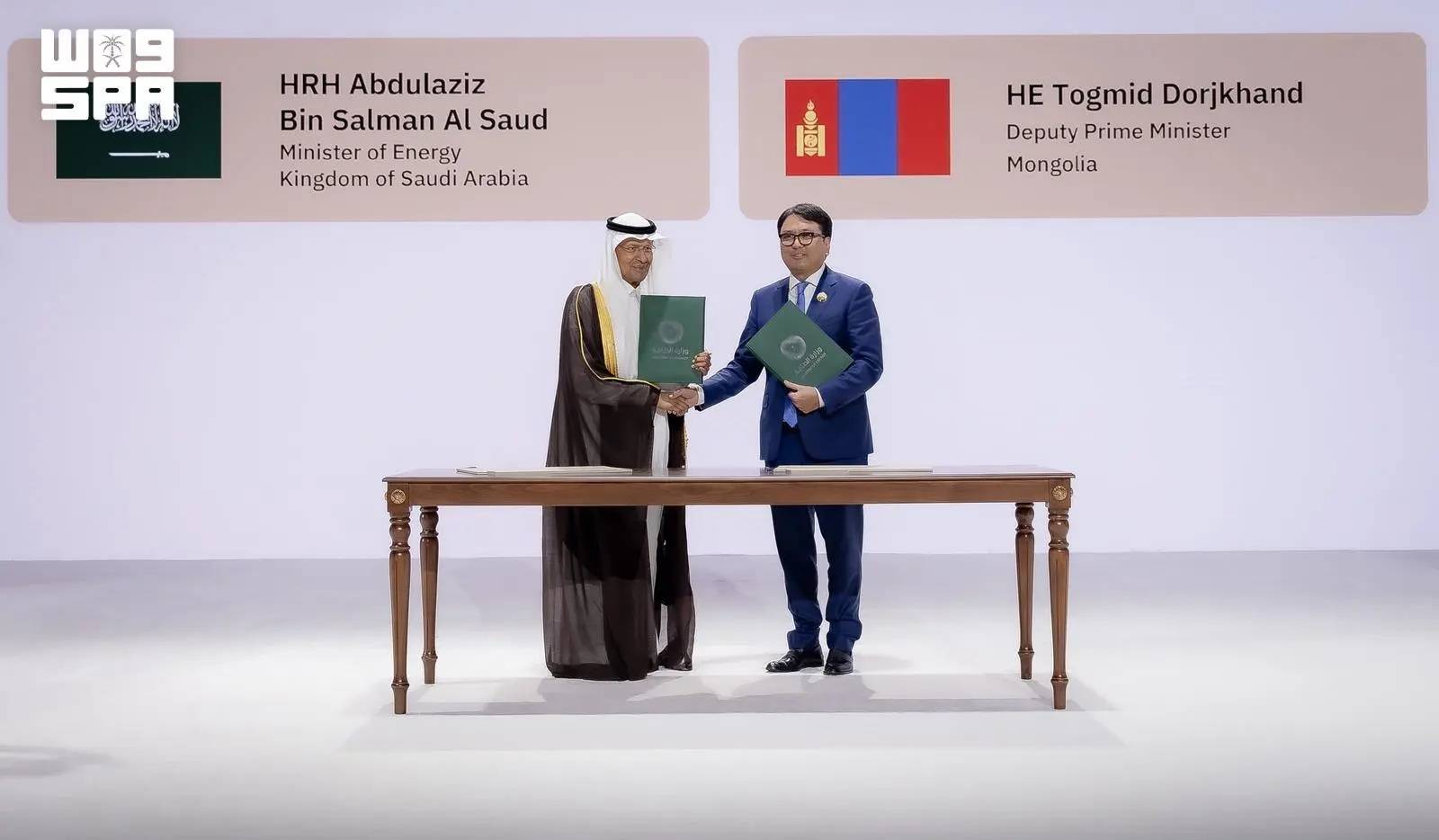
Prince Abdulaziz and Mongolia’s Deputy Prime Minister Togmid Dorjkhand signed an MoU to strengthen cooperation between the two countries in oil and gas and their derivatives, refining, petrochemicals, electricity, power interconnection, renewable energy, energy efficiency, energy storage, and technologies and solutions related to climate change mitigation, including Circular Carbon Economy solutions.

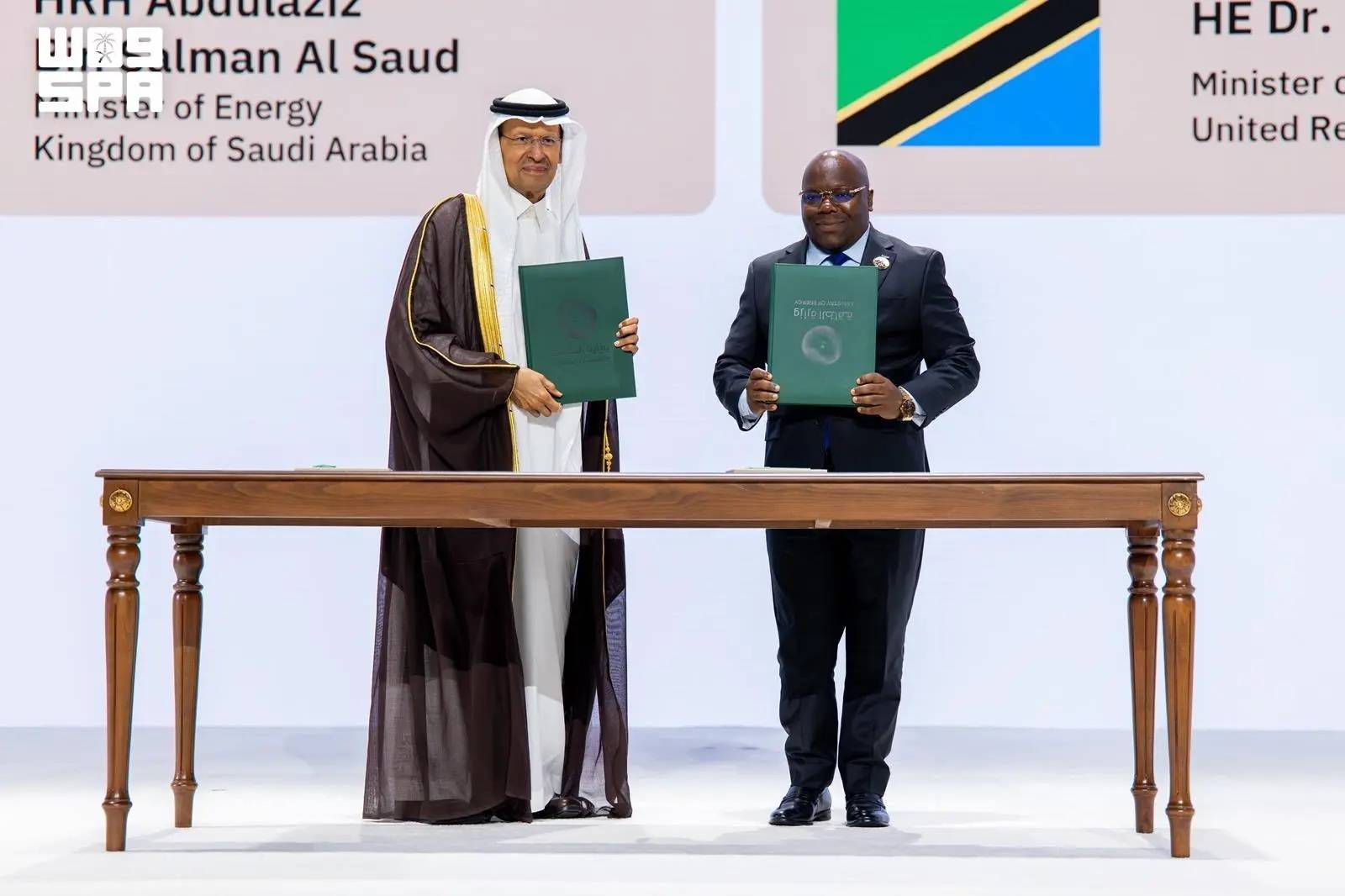
Saudi Minister of Energy and Minister of Industry and Mineral Resources Prince Abdulaziz bin Salman bin Abdulaziz and Tanzania’s Minister for Energy Juma Zuberi Homera during the signing ceremony. (SPA)

The MoU covers cooperation in digital transformation, innovation, cybersecurity applications and artificial intelligence in the energy sector. It seeks to develop strategic partnerships between the two countries to secure materials, products and services across energy sectors and their supply chains and technologies; promote the development and use of sustainable petrochemical materials in construction and other sectors; strengthen cooperation between energy companies; and support them in implementing large-scale electricity projects and harnessing renewable energy in both countries.

Prince Abdulaziz signed an MoU with Tanzania’s Minister for Energy Juma Zuberi Homera to strengthen cooperation between the two countries in the supply of refined petroleum products and explore opportunities related to associated infrastructure, assess opportunities in liquefied natural gas, exchange technical expertise in oil and gas exploration, and explore opportunities in petrochemical production.

The MoU covers electricity, renewable energy, energy efficiency, and the exchange of technologies and solutions related to climate change mitigation, including clean cooking solutions and Circular Carbon Economy technologies and solutions. It further includes exploring opportunities related to the Oil Sustainability Program and transport and fuel infrastructure, as well as cooperation in digital transformation, innovation, cybersecurity applications and artificial intelligence in the energy sector.

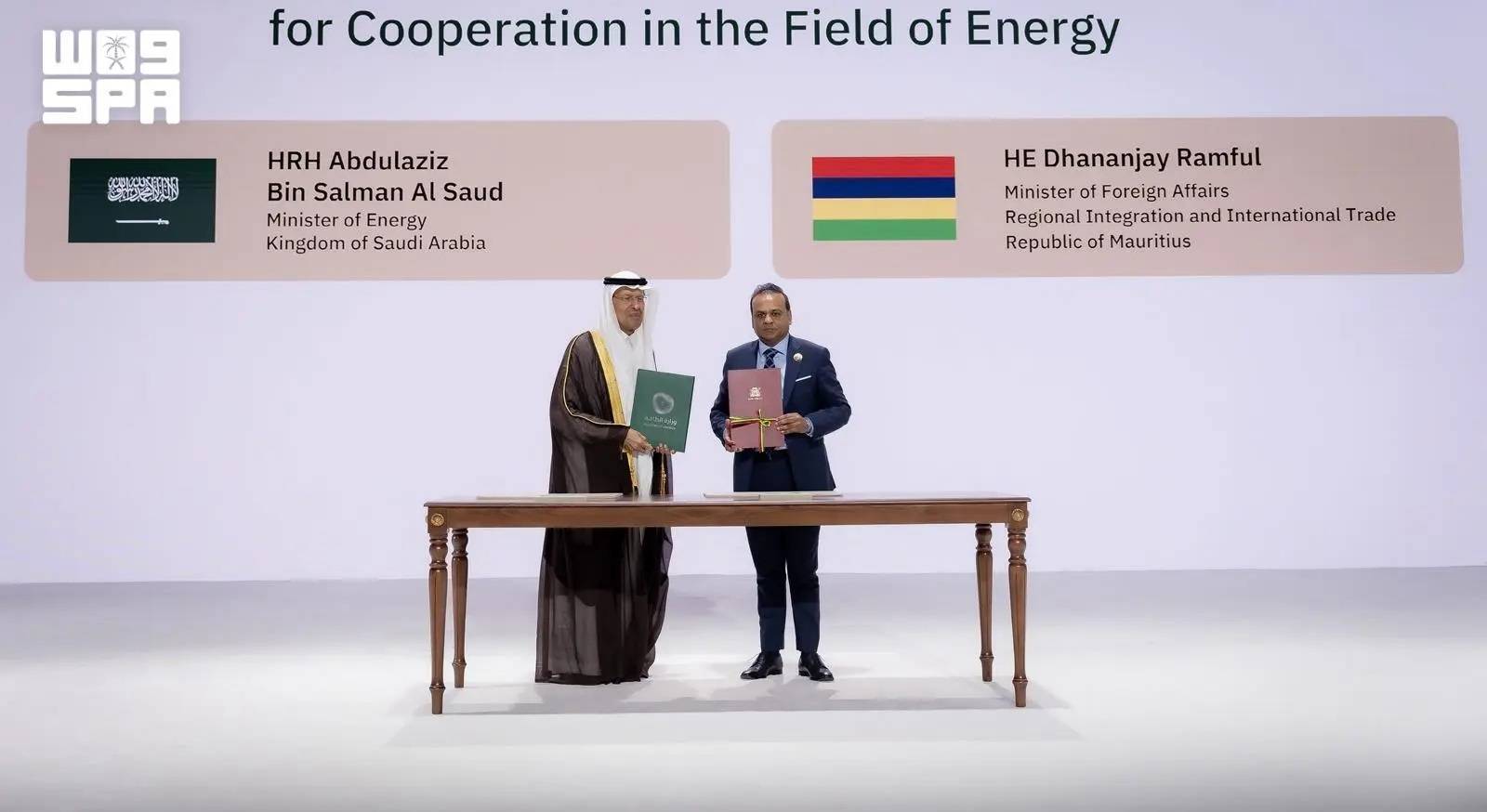
Saudi Minister of Energy and Minister of Industry and Mineral Resources Prince Abdulaziz bin Salman bin Abdulaziz and Mauritius’s Minister of Foreign Affairs, Regional Integration and International Trade Dhananjay Ramful during the signing ceremony. (SPA)

Prince Abdulaziz and Cyprus’s Minister of Energy, Commerce and Industry Michael Damianos signed an MoU establishing a framework for cooperation in oil and gas and their derivatives, refining, petrochemicals, electricity, clean hydrogen and its derivatives, renewable energy, energy efficiency, energy storage, and technologies and solutions related to climate change mitigation, including Circular Carbon Economy technologies and solutions.

The MoU covers cooperation in digital transformation and cybersecurity applications in the energy sector, as well as efforts to advance and support shared international policy priorities through relevant multilateral negotiations, including under the United Nations Framework Convention on Climate Change, the Paris Agreement and the international legally binding instrument on plastic pollution.

It further provides for cooperation on the development and use of sustainable petrochemical materials in construction and other sectors, the development of appropriate infrastructure to expand energy access, and cooperation between companies operating in energy-related fields.

Saudi Minister of Energy and Minister of Industry and Mineral Resources Prince Abdulaziz bin Salman bin Abdulaziz and Mongolia’s Deputy Prime Minister Togmid Dorjkhand. (SPA)

Prince Abdulaziz signed an MoU with Mauritius’s Minister of Foreign Affairs, Regional Integration and International Trade Dhananjay Ramful covering cooperation in oil and gas and their derivatives, refining, petrochemicals, electricity, clean hydrogen and its derivatives, renewable energy, energy efficiency, energy storage, and technologies and solutions related to climate change mitigation, including Circular Carbon Economy technologies and solutions.

The MoU also covers cooperation in digital transformation and cybersecurity applications in the energy sector.

It provides for efforts to advance and support shared international policy priorities through relevant multilateral negotiations, including under the United Nations Framework Convention on Climate Change, the Paris Agreement and the international legally binding instrument on plastic pollution.

It covers cooperation on the development and use of sustainable petrochemical materials in construction and other sectors, as well as the development of appropriate infrastructure to expand energy access.


Minister of Finance Leads Saudi Delegation to 2026 IMF-World Bank Annual Meetings

Saudi Minister of Finance Mohammed Aljadaan. (SPA file)
TT

Minister of Finance Leads Saudi Delegation to 2026 IMF-World Bank Annual Meetings

Saudi Minister of Finance Mohammed Aljadaan. (SPA file)

Minister of Finance Mohammed Aljadaan is leading Saudi Arabia's delegation to the 2026 Annual Meetings of the International Monetary Fund (IMF) and World Bank Group (WBG) in Bangkok from October 12-17.

The Saudi delegation includes Governor of the Saudi Central Bank (SAMA) Ayman Alsayari; Deputy Chair of the International Monetary and Financial Committee (IMFC) Dr. Ryadh Alkhareif; Deputy Minister of Finance for International Relations Khalid Bawazier; CEO of the Saudi Fund for Development (SFD) Sultan Almarshad; CEO of the National Debt Management Center (NDMC) Hani Almedaini; and experts from the Ministry of Finance, SAMA, SFD, NDMC, and the Zakat, Tax and Customs Authority (ZATCA).

Aljadaan will participate in the IMF and Gulf Cooperation Council (GCC) High-Level Seminar; the IMF Managing Director's meeting with the Middle East, North Africa, Afghanistan and Pakistan; and the Arab Governors' meeting with the President of the WBG.

Aljadaan and Alsayari will participate in the Third G20 Finance Ministers and Central Bank Governors (FMCBG) Meeting, held under the US Presidency. Discussions will focus on key developments in the global economy, emerging challenges, and ways to strengthen international economic cooperation.

Aljadaan will chair the IMFC meeting, where members will exchange views on developments in the global economy, including growth prospects and emerging risks. Discussions will cover global economic policy priorities and the IMF's role in addressing these challenges through financial assistance, advice, and capacity development for its members.

He will also take part in the WBG Governor's Development Committee meeting to discuss the latest updates in the WBG's development strategies, including its role in helping to create jobs as a key economic driver, enabling the private sector, and supporting countries in reforming policies that attract investments and promote economic growth.

The Annual Meetings serve as a global platform that brings together finance ministers, central bankers, senior officials from international organizations, private sector executives, representatives from civil society organizations, and academics to discuss global issues, including the global economy, sustainable development, poverty eradication, and other economic and financial topics.