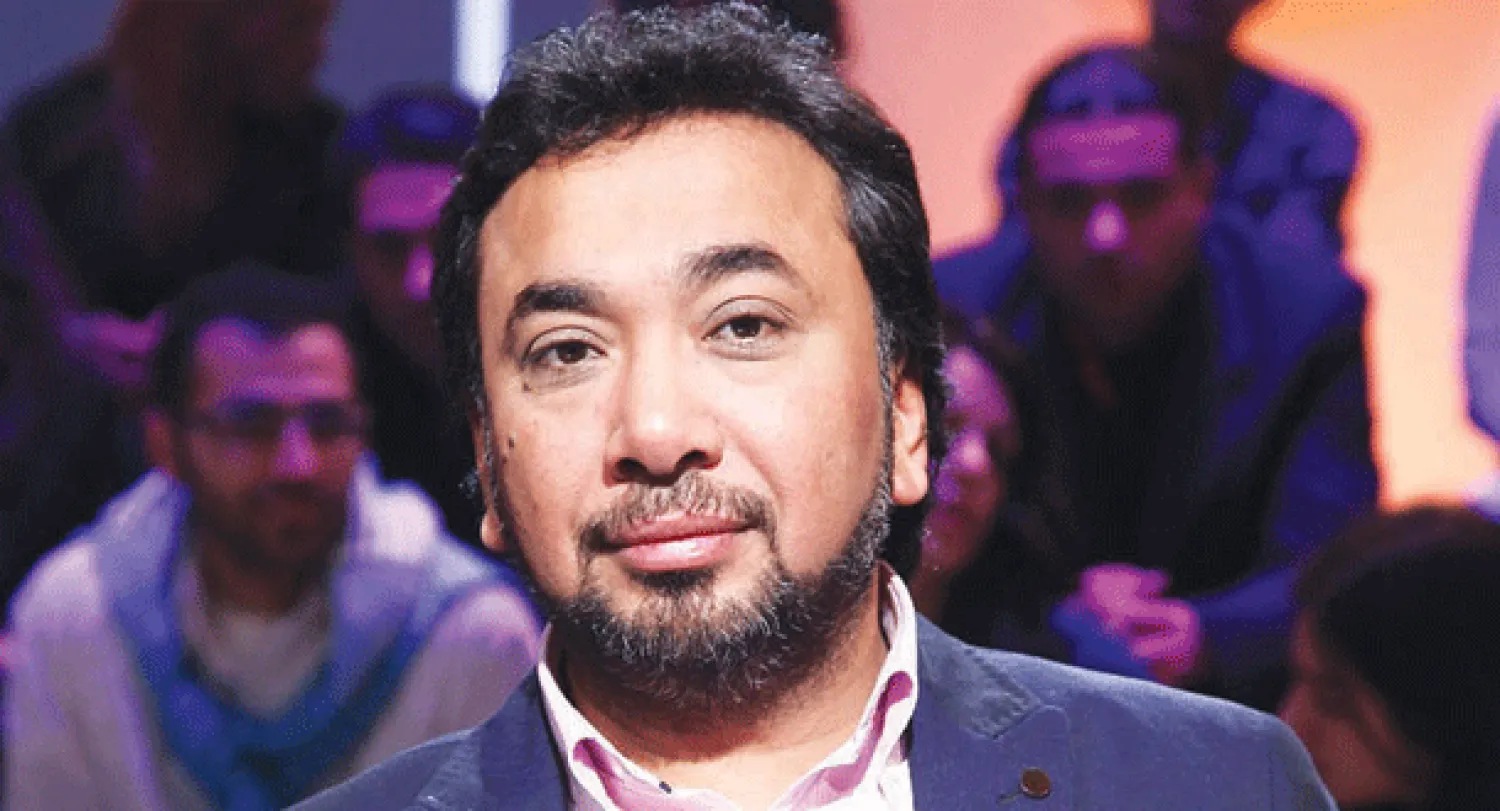
صالح الشادي: على العرب وفنانيهم الرد على الإساءة لأي دين من الأديان

صالح الشادي: على العرب وفنانيهم الرد على الإساءة لأي دين من الأديان
TT

صالح الشادي: على العرب وفنانيهم الرد على الإساءة لأي دين من الأديان

صالح الشادي: على العرب وفنانيهم الرد على الإساءة لأي دين من الأديان

> في جلسة تجمع الفن على أشكاله من طرب وتمثيل وإخراج، بالأدب والشعر والصحافة، تطل كل من المطربة أنغام، والأديب الشاعر صالح الشادي، والصحافي والناقد الفني علي فقندش، والممثلة نشوى مصطفى، والمخرجة إنجي جمال في برنامج «نورت مع أروى» على «MBC1».
البداية مع المطربة أنغام التي تتحدث عن مسلسل «في غمضة عين» الذي قدمت فيه أول دور لها في الدراما التلفزيونية، وعن كون العمل لم يحظ بالقدر الذي يستحقه من المتابعة بسبب الأحداث في مصر. من ناحية أخرى، تتطرق أنغام إلى النقد الذي وجه إلى أدائها في المسلسل، معتبرة أنها تقيم النقد بشكله البناء وتأخذ به. وحول المشكلة التي جمعتها مع كل من الممثلة داليا البحيري والمخرج محمد الشقنقيري بسبب الخلاف على ترتيب اسمي أنغام وداليا في شارة المسلسل، ووصلت بهما إلى أروقة القضاء، توضح أنغام أن كل ما أثير حول هذا الموضوع هو عبارة عن مبالغات إعلامية، مشددة على علاقة الزمالة الطيبة التي تجمعها بداليا البحيري.
وفي الفقرة الثانية، يتحدث الأديب والشاعر السعودي صالح الشادي عن أوبريت «البراءة يا رسول الله» الذي كتبه وشارك فيه أكثر من خمسين فنانا، للرد على الإساءة لأي دين من الأديان السماوية، معتبرا أنه على العرب وفنانيهم توحيد الأصوات والأفعال للرد على تلك الإساءات. كما يتطرق الشادي بالتوضيح إلى تعليق نسب إليه في الماضي حول ندمه على كتابة الأغنيات. ويعرض برنامج «نورت مع أروى» اليوم الاثنين في الساعة التاسعة مساء.


Saudi, Polish Defense Ministers Discuss Ways to Support Regional Security

 Saudi Minister of Defense Prince Khalid bin Salman bin Abdulaziz. (SPA)
Saudi Minister of Defense Prince Khalid bin Salman bin Abdulaziz. (SPA)
TT

Saudi, Polish Defense Ministers Discuss Ways to Support Regional Security

 Saudi Minister of Defense Prince Khalid bin Salman bin Abdulaziz. (SPA)
Saudi Minister of Defense Prince Khalid bin Salman bin Abdulaziz. (SPA)

Saudi Minister of Defense Prince Khalid bin Salman bin Abdulaziz held on Tuesday a telephone call with Poland's Deputy Prime Minister and Minister of National Defense Władysław Kosiniak-Kamysz.

They reviewed military and defense cooperation between their countries and discussed ways to support regional security and stability.

They also condemned the terrorist attacks launched by the Houthi militia against Saudi Arabia.


Qatar, Kuwait Condemn Houthi Attacks on Saudi Arabia in Calls with FM

Saudi Minister of Foreign Affairs Prince Faisal bin Farhan bin Abdullah during a visit to Washington in September 2026. (Getty Images/AFP)
TT

Qatar, Kuwait Condemn Houthi Attacks on Saudi Arabia in Calls with FM

Saudi Minister of Foreign Affairs Prince Faisal bin Farhan bin Abdullah during a visit to Washington in September 2026. (Getty Images/AFP)

Saudi Minister of Foreign Affairs Prince Faisal bin Farhan bin Abdullah received on Tuesday separate phone calls from Qatar's Prime Minister and Minister of Foreign Affairs Sheikh Mohammed bin Abdulrahman bin Jassim Al Thani and Kuwait's Minister of Foreign Affairs Sheikh Jarrah Jaber Al-Ahmad Al-Sabah.

The ministers discussed the latest developments in the region and renewed their condemnation of the heinous attacks by the Houthi terrorist militia targeting civilian facilities in Saudi Arabia.

The calls also covered regional developments and the importance of continued efforts, coordination, and consultations among their countries to strengthen joint Gulf cooperation and preserve regional security and stability.


Why AI Makes Computer Worms Harder to Stop

Letters spelling "AI," a keyboard and a robotic hand in this illustration created on September 23, 2026. (Reuters)
TT

Why AI Makes Computer Worms Harder to Stop

Letters spelling "AI," a keyboard and a robotic hand in this illustration created on September 23, 2026. (Reuters)

Anthropic's warning that AI-powered "worms" could soon spread across smart gadgets is the latest in a series of studies showing how artificial intelligence could supercharge self-spreading malware.

A computer worm is malicious software that spreads between devices on its own.

In June, Nicolas Papernot, an associate professor of electrical and computer engineering at the University of Toronto, led a team that built a prototype AI worm using freely available AI models.

Papernot, who has signed an open letter with recommendations for policymakers, spoke to AFP about why AI makes these attacks harder to stop.

The interview has been edited for length and clarity.

Q: How is AI changing these types of attacks?

A: The reality is that a lot of these "IoT" (Internet of Things or connected home) devices have very poor cybersecurity hygiene, and so they are very easy targets for bad actors to compromise.

Historically, a worm would exploit a fixed set of vulnerabilities, and that meant you could fix these vulnerabilities and prevent the worm from propagating any further to devices that had been updated.

Now, with AI, an attacker can design a worm that tailors the attack strategy to that device's specifics and these vulnerabilities can be different.

This makes it significantly harder to interrupt the propagation of an AI-driven computer worm, because you have to anticipate all the possible vulnerabilities the devices might present.

Some of these vulnerabilities are not software bugs.

They can also be misconfigurations -- for instance, if someone has used the same password for multiple services, or hasn't configured a database properly.

What AI-driven malware does is accelerate the pace at which these vulnerabilities are exploited and the scale.

In the past, your corner coffee shop, or the laptop in your basement that you use very rarely, might not be up to date, but it wouldn't be targeted by a human attacker, because they don't have the resources and the time to do that.

Now, the autonomy gained by using AI means that all these devices that are less immediate targets become interesting targets as a launchpad to attack more interesting targets.

But we have to keep in mind that a human is launching an agent.

Once launched, the agent can replicate, as we showed in our work, but it is launched by a human.

Q: What can we do to mitigate the risks?

A: We won't bring the risk to zero and we have to realize that, despite the fact that some of these vulnerability fixes are available, people don't update their devices or don't apply the fixes in a timely manner.

Despite cybersecurity experts calling for increased cybersecurity for decades, we still live in a world where a lot more can be invested in improving the security of our computer systems.

There are really three things we recommend in the very short term.

The first is to change development and testing practices to ensure that AI models are initially disconnected from the internet, as a precaution, to understand their behavior better before we expose critical infrastructure on the internet [to them].

The second recommendation is to create an international body to standardize both how we train and how we contain AI models. Both are important. We want to train models that are safer.

The last part is about making reporting of security incidents mandatory. Right now, we are only getting information as a function of what AI developers are willing to release, and that's a big problem.

In particular, the academic community needs a lot more information about incidents to be able to develop countermeasures much more quickly.

Otherwise, we have to do a lot of research on understanding the threat first, before we can develop the countermeasures. Otherwise, we won't see what bad actors are doing until an attack is launched.