

«هنا لندن» تصمت بعد 84 عاماً

مع التحول الرقمي

مبنى «بوش هاوس» في لندن المقر السابق لخدمة «بي بي سي العربية»

TT

«هنا لندن» تصمت بعد 84 عاماً

مبنى «بوش هاوس» في لندن المقر السابق لخدمة «بي بي سي العربية»


بعد 84 عاماً من انطلاقها، توقفت أمس (الجمعة)، إذاعة «بي بي سي نيوز» عربي البريطانية، عن البث عبر الأثير عند الساعة 13:00 (بتوقيت غرينتش)، لتُذاع فقط بعض البرامج الإذاعية المختارة على موقع bbc.com/arabic.
وبعد اليوم لن تدق ساعة «بيغ بن»، ولن تُسمع عبارة «هنا لندن»، مع إعلان هيئة الإذاعة البريطانية أمس، إنهاء رحلتها الإعلامية الطويلة التي انطلقت في عام 1938، وكانت قد وضعت الخطوات الأولى في خططها لتصبح خدمة رقمية في المقام الأول، بهدف تعزيز تفاعلها مع جمهورها في جميع أنحاء العالم العربي.
وأوضحت الهيئة البريطانية في عدد من بياناتها أن قرارها «يتماشى مع التغيرات التي طرأت على احتياجات الجمهور حول العالم، واتّجاه المزيد من الناس صوب المنصات الإخبارية الرقمية».
يبلغ عدد جمهور «بي بي سي نيوز عربي» 39 مليوناً أسبوعياً. وفي حين أن أكثر من 12 في المائة من إجمالي جمهور «بي بي سي عربي» يستخدمون خدماتها الإذاعية، فإن 5 في المائة فقط من إجمالي الجمهور يستخدمون الإذاعة.وحققت الخدمة العالمية بالفعل مستويات قياسية من النمو على المنصات الرقمية، إذ تصل إلى 148 مليون شخص في المتوسط أسبوعياً. وزادت الحصة الرقمية من الوصول إلى لغات الخدمة العالمية بأكثر من الضِّعف، لترتفع من 18 في المائة إلى 43 في المائة منذ عام 2018.
وتتوافر برامج وبودكاست حالية وجديدة على موقعها العربي، ويشتمل محتواه الجديد على «نشرة إخبارية يومية»، وستكون ملخصاً للقصص الإخبارية الكبيرة، و«نشرة إخبارية رياضية»، عبارة عن تقرير موجز عن الأخبار الرياضية الرئيسية.ويستمر برنامج «بي بي سي إكسترا»، الذي يُذاع منذ فترة طويلة، على الموقع بوصفه «بودكاست». في حين تستمر سلسلة «خرافات»، التي تتحقق من صحة الأخبار وما يُنشر على وسائل التواصل الاجتماعي، وسلسلة «أبعاد الصورة»، التي تقدم تحليلاً متعمقًا للشؤون الجارية، أيضاً بوصفها مدونات صوتية.
تقول ليليان لاندور، مديرة خدمات «بي بي سي الإخبارية العالمية»، إن إذاعة «بي بي سي نيوز» عربي تُشكل «أحد الفصول البارزة في تاريخ بي بي سي عربي، وفي تاريخ الخدمة العالمية كلها. وعلى مدى عقود، اعتمد المستمعون في جميع أنحاء العالم العربي على سماعها؛ وتُضيف: «يزداد عدد الأشخاص الذين يصلون إلى الأخبار رقمياً، ومن خلال توسيع المحتوى الصوتي والرقمي، ستستمر (بي بي سي نيوز) عربي في خدمة جمهورها والتواصل معه لتقديم الصحافة الموثوق بها التي تشتهر بها في المنطقة وخارجها».
من جهته، يقول محمد يحيى، مدير محتوى الوسائط المتعددة في «بي بي سي عربي»: «نريد الوصول إلى جمهورنا على المنصات الرقمية التي يختارها. هذه الاحتياجات المتغيرة للجمهور هي السبب في أنه من الضروري أن نطوّر محتوانا الصوتي والرقمي. أنا فخور للغاية بكل هؤلاء، في الماضي والحاضر، الذين أسهمت تقاريرهم وأفكارهم المؤثرة في استمرار وتميز إذاعة (بي بي سي عربي)، وأنا ممتنّ للغاية للمستمعين على دعمهم على مدى عقود». ويتابع يحيى قائلاً: «يلجأ ما يقرب من 40 مليون شخص في الأسبوع إلى (بي بي سي عربي) لمعرفة الأخبار، ويظل التزامنا بتقديم صحافة محايدة ومستقلة إلى العالم العربي أولويتنا مع دخولنا هذه المرحلة من توسعنا الرقمي».


Typhoon Dujuan Leaves 4 Dead in Japan, 45,000 Houses Without Power

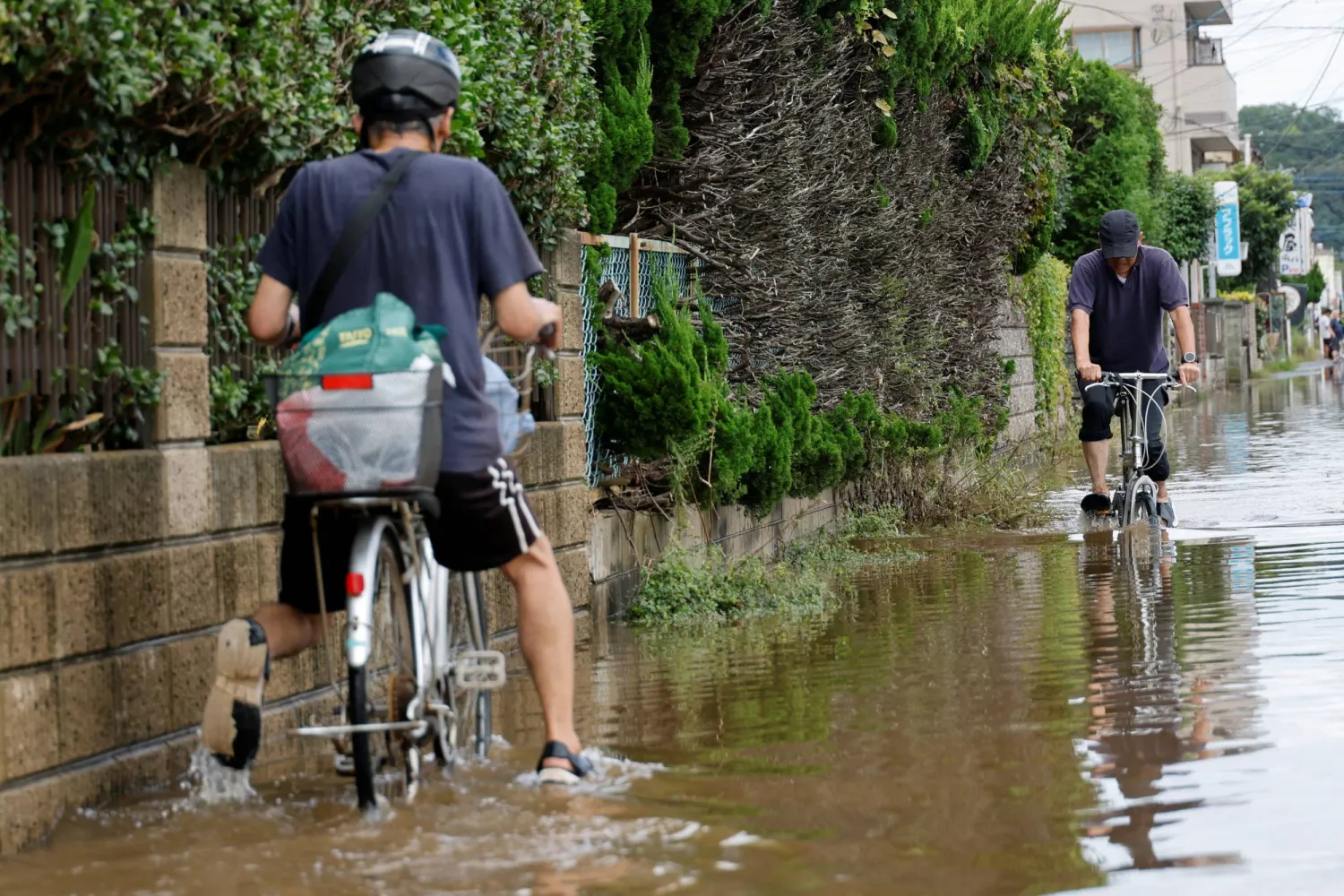
Residents cycle through a flooded street after Typhoon Dujuan brought torrential rain to Sakura, Chiba prefecture, Japan, September 22, 2026. REUTERS/Kim Kyung-Hoon
TT

Typhoon Dujuan Leaves 4 Dead in Japan, 45,000 Houses Without Power

Residents cycle through a flooded street after Typhoon Dujuan brought torrential rain to Sakura, Chiba prefecture, Japan, September 22, 2026. REUTERS/Kim Kyung-Hoon

Typhoon Dujuan left at least four people dead and 22 injured in Japan, while thousands of houses near Tokyo were without power after the storm swept through the region, authorities said Tuesday.

The typhoon moved away from Japan's coast and out into the Pacific by morning, allowing authorities to lift or downgrade most heavy rain and landslide warnings.

Dujuan had already led to the early closure in the capital of the one of the world's biggest video game trade fairs.

Japan often sees strong typhoons in the late summer and early autumn, with other storms this season disrupting some events at the Asian Games being held in the country.

The Fire and Disaster Management Agency said three people died in Chiba prefecture and one in Kanagawa region, both near Tokyo.

Search operations were continuing for six people missing after landslides triggered by torrential rain, the agency said, according to AFP.

More than 45,000 households in Chiba near Tokyo were still without electricity on Tuesday afternoon, while over 460 houses were damaged.

Although Dujuan weakened as it moved northeast, it dumped record rainfall in parts of the Tokyo area.

Oshima, an island about 120 kilometers (75 miles) south of central Tokyo, recorded 832 millimeters of rain over 48 hours, more than double its average rainfall for the whole of September, public broadcaster NHK reported.

Rainfall in Tokyo's Edogawa Ward reached a record 282.5 millimeters over 24 hours.

Scientists say human-driven climate change is intensifying the risk posed by heavy rains because a warmer atmosphere holds more water.


G7 Foreign Ministers Call on Iran to Stop Arming Houthis

FILE PHOTO: Flags are pictured during the first working session of G7 foreign ministers in Muenster, Germany, November 3, 2022. REUTERS/Wolfgang Rattay/Pool/File Photo/File Photo
TT

G7 Foreign Ministers Call on Iran to Stop Arming Houthis

FILE PHOTO: Flags are pictured during the first working session of G7 foreign ministers in Muenster, Germany, November 3, 2022. REUTERS/Wolfgang Rattay/Pool/File Photo/File Photo

G7 foreign ministers on Monday called on Iran to end its arming and support of Houthis in Yemen, which they said constituted a dangerous pattern of escalation that risked undermining international trade ⁠and creating global instability.

“We condemn in the strongest terms the unacceptable continued strikes carried out by the Houthis in Yemen and against the Kingdom of Saudi Arabia,” the ministers of Britain, Canada, France, ⁠Germany, Italy, Japan and the United States said in a statement after a meeting on the sidelines of ⁠the UN General Assembly.

“We call on the Houthis to immediately cease all ⁠military actions, all threats and attacks against civilian shipping, and ⁠to return to the political process in good faith,” they added.
The G7 statement comes ahead of the annual General Assembly in New York, where senior Iranian officials are due to speak.

On Monday, the United Nations condemned the continued cross-border attacks by the Houthis against the Kingdom, including an attempted attack on Riyadh and attacks on civilians and energy infrastructure, calling on all parties to exercise restraint and prevent any further escalation.

During a press briefing, spokesperson for the Secretary-General Stephane Dujarric expressed deep concern over the ongoing military escalation in and around Yemen, including Houthi offensives in Taiz, Lahj, and Marib, and their grave consequences for civilians in Yemen and across the region.

Dujarric stressed the need to uphold obligations under international humanitarian law, including the prohibition of direct attacks on civilians and civilian infrastructure.


A Cuban Zoo, and its Animals, in Epic Battle for Survival

A worker feeds a dromedary (Camelus dromedarius) at the National Zoo of Havana on September 15, 2026. (Photo by YAMIL LAGE / AFP)
TT

A Cuban Zoo, and its Animals, in Epic Battle for Survival

A worker feeds a dromedary (Camelus dromedarius) at the National Zoo of Havana on September 15, 2026. (Photo by YAMIL LAGE / AFP)

Every day, veterinarians and zookeepers make their way to Cuba's National Zoo by whatever means they can, determined to not abandon the nearly 1,000 animals in their care and help save species at risk of extinction.

Their dedication and food donations are vital to keeping alive an array of rhinos, jaguars and tigers -- including an extremely rare white tiger -- in the midst of a severe crisis that has left many Cubans struggling to feed themselves.

Just getting to the reserve situated 20 kilometers (12 miles) from central Havana is a headache for staff, as public transportation has come to a near standstill nine months into a US fuel blockade.

"The workers come by bicycle, pedal scooter or electric motorbike to ensure the animals have food and water every day," said Yoel Machado, the zoo's animal welfare manager.

Their efforts are about more than keeping the animals fed.

The 345-hectare (850-acre) park serves as a genetic reserve of international conservation importance, housing breeding populations of vulnerable or endangered species, including black and white rhinos, hippos and jaguars.

Yet the same crisis that has left workers scrambling to source meat, medicine and water has forced the zoo to curb reproduction programs and increasingly rely on handouts to sustain its animals.

During a recent visit by AFP, two Bengal tiger cubs, one an extremely rare white specimen, frolicked in their enclosure beneath the watchful gaze of their mother, oblivious to the strenuous efforts made to keep them alive.

AFP did not see any animals that appeared malnourished or ill, but Angel Cordero, the veterinarian in charge of big cats, said the tiger cubs "could be in better shape."

He revealed he needed to ration their food to prevent it from running out.

"It's no use giving them plenty if it only lasts three days," he said.

Big cats need about seven kilograms (15 pounds) of meat per day per adult, but such quantities are hard to come by.

Even when it is available, recurring blackouts of up to 30 hours at a stretch make it difficult to preserve.

With fuel extremely scarce, there's also the issue of how to distribute food in a nature reserve the size of New York's Central Park.

For now, private donors have come to the rescue for the zoo's various needs.

Every Monday, Ana Fernandez, a Cuban-American woman born in Tennessee who has been living in Cuba for nine years, donates meat.

"The animals shouldn't have to suffer," the 50-year-old said, though she added that "some days it's not enough for all of them."

Recently, the reserve went 23 days without electricity, which meant it also lacked running water.

The staff "didn't just sit around waiting for things to fall from the sky," the zoo's director Juan Carlos Corella said.

"We looked for solutions, water trucks were brought in, and we found food for the animals almost daily," he said, while admitting that keeping the park open has become "very difficult."

An exodus of vets has added to the zoo's woes.

More than a third have left for better-paying jobs elsewhere, mostly in Cuba's burgeoning private sector.

Some wait tables in cafes while others work for private veterinary clinics.

The zoo is home to the only breeding group of black rhinos outside of Africa, as well as a large population of white rhinos, the largest herd of Grant's zebras in the Americas and hippos that regularly bear calves.

"Here we have a high genetic value, and one of immense international importance," Machado, the animal welfare manager, explained.

However, the crisis has forced the park to slow down its breeding programs.

The reason is simple: each new offspring requires more food, medicine, and staff.

"We can't keep increasing the number of animals," Machado said, adding that he preferred to ensure the current population was "as well cared for as possible."

And yet life keeps renewing itself, regardless.

In recent months the zoo has welcomed baby tigers, hyenas, jackals, and a black dromedary named Esperanza (Spanish for "Hope"), the first of its kind born in Cuba in three decades.