
«رحلة الخلود»... من الصالات العراقية إلى العالمية

ملصق فيلم «رحلة الخلود» (المخرج فرانك جلبرت)
TT

«رحلة الخلود»... من الصالات العراقية إلى العالمية

ملصق فيلم «رحلة الخلود» (المخرج فرانك جلبرت)
فيلم آخر من إخراج فرانك جلبرت، العرض الرسمي له كان في 16 فبراير (شباط) الماضي في صالات السينما العراقية، يتحدث عنه لـ«الشرق الأوسط» قائلاً: «يحكي (رحلة الخلود) قصة أستاذ جامعي يُزج في السجن عن طريق الخطأ، ويكون شاهد عيان على كل ما يجري في الزنزانة، وبعد خروجه يقرر أن يكشف معاناة المعتقلين الأبرياء إلى العالم. يسافر إلى الولايات المتحدة الأميركية حيث يلتقي بصحافي يعمل في مجال (حقوق الإنسان) فيسرد له كل ما عايشه في السجن.
أحداثه حقيقية تحكي قصة 3 شباب آشوريين هم: يوسف توما، ويوبرت بنيامين، ويوخنا إيشو، أُعدموا في 3 فبراير من عام 1985 في سجن أبو غريب بالعاصمة العراقية بغداد، على يد الأجهزة القمعية للنظام، والجريمة نضالهم من أجل الحرية وقضايا وحقوق الشعب المشروعة»، حسب قوله.
ويؤكد أن الفيلم هو «توثيق لمرحلة مؤلمة لتاريخ هذا الشعب ومدى الظلم الذي تعرض له من دون أن يُدرك العالم بأن ما حصل ضد شعب أعزل بريء هو جريمة بحق الإنسانية. الفيلم من بطولة النجم الأميركي، إيريك روبرتس، شقيق النجمة جوليا روبرتس، والممثل إيبي سركيس من أميركا، إلى جانب فنانين عراقيين هم سامي قفطان، وكريم محسن، وكاظم القريشي، وسامي ياقو، ومن السويد جوزيف جاجان، وميشيل إيزك.
وتدور أحداثه بين حقبة الثمانينات والتسعينات. صُوّر في الولايات المتحدة بمدينة لوس أنجليس، وفي العراق. استغرق العمل عليه 3 سنوات من 2017 لغاية 2020.
شارك بالتمثيل فيه 42 ممثلاً وأكثر من 1300 كومبارس. وفي الفيلم استخدمت لغات خمس هي الإنجليزية، والعربية، والآشورية، والكردية، والتركية. أجواء تصويره كانت صعبة جداً، خصوصاً في بغداد حيث كانت الحرب دائرة ضد تنظيم (داعش) الإرهابي، وكان أحد الأفلام المرشحة ليمثل العراق في مهرجان الـ(أوسكار) العالمي بالولايات المتحدة الأميركية، وهو من إنتاج شركة (FG Productions)».
ولد فرانك جلبرت في مدينة كركوك العراقية (1981)، أجبرته الأوضاع الأمنية المضطربة للسفر إلى الولايات المتحدة حيث أكمل دراسته في مجال السينما بمدينة شيكاغو. يحمل الجنسية الأميركية، وهو عضو في نقابة الفنانين العراقيين، وفي اتحاد الإذاعيين والتلفزيونيين، وعضو في الصحافة الدولية، وفي اتحاد الفنانين بالولايات المتحدة.


New Four-lane Bridge Opens Between China, North Korea

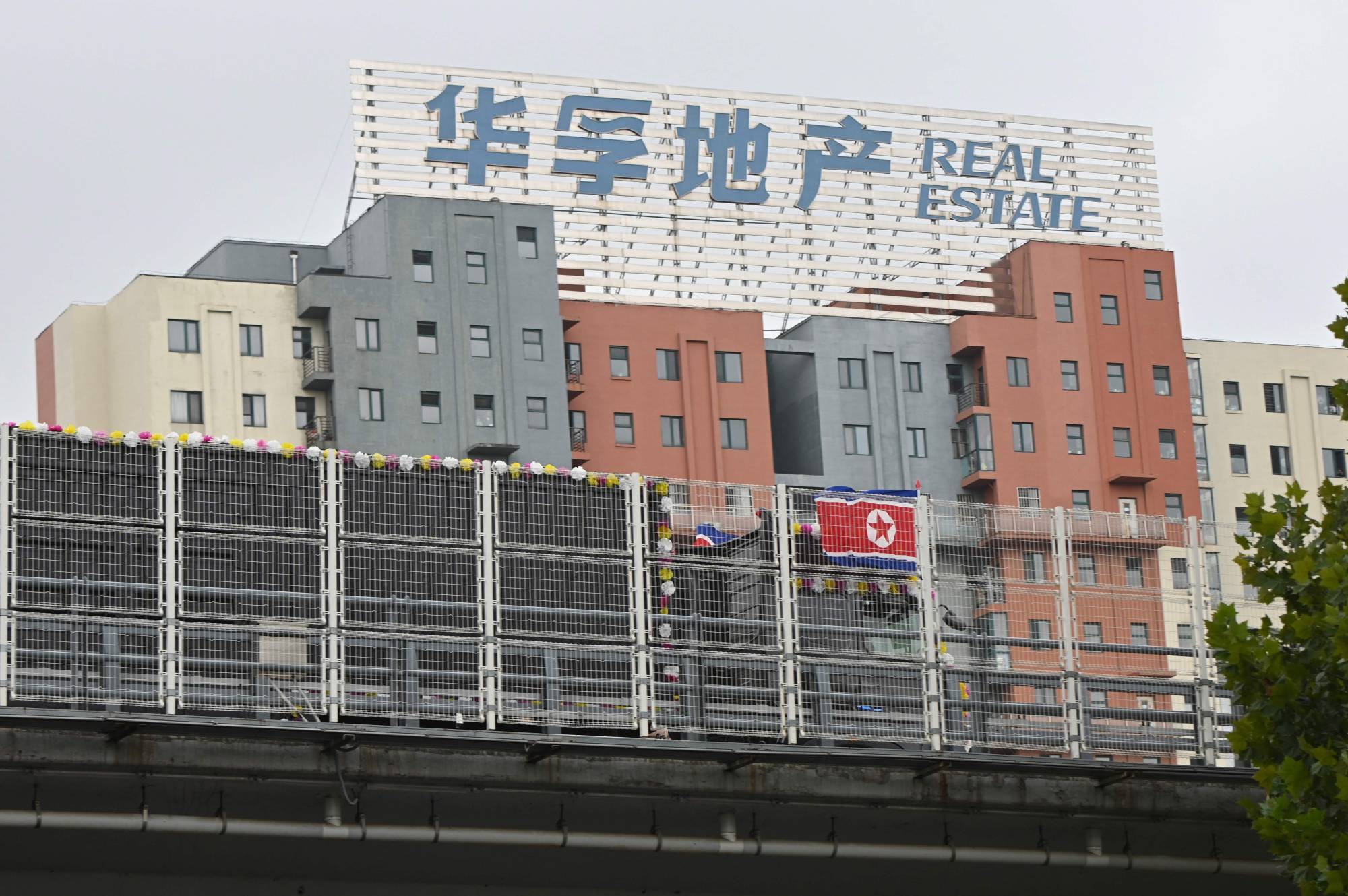
A general view shows the new cross-border bridge linking China and North Korea in Dandong, Liaoning Province, on October 15, 2026. (Photo by Michael ZHANG / AFP)
TT

New Four-lane Bridge Opens Between China, North Korea

A general view shows the new cross-border bridge linking China and North Korea in Dandong, Liaoning Province, on October 15, 2026. (Photo by Michael ZHANG / AFP)

A new four-lane road bridge linking China and North Korea finally opened on Thursday, 12 years late, enabling the Asian giant and its isolated nuclear-armed neighbor to step up cross-border trade substantially.

China is its neighbor's largest trading partner and a vital diplomatic and political backer, although relations have not always been smooth with the ruling Kim dynasty.

Hundreds of people gathered on Thursday in the northern Chinese border town of Dandong, taking selfies in front of the 3,026-meter (9,927-feet) New Yalu River vehicle bridge before it opened.

Trucks bearing the nations' flags began moving in both directions late morning, AFP reporters at the scene said, some of the North Korean vehicles decorated with flowers.

"It's great," one woman who came to watch told AFP in the town dotted with Chinese as well as Korean shops and restaurants, where residents were relieved the bridge had finally open.

"It's already been over 10 years. It's certainly going to be good for business," she said, without wishing to be named, accompanied by her friend and her dog.

"I hope the standard of living in North Korea can rise to the level we have here," Dandong local Yu Shuyan, who before the pandemic had visited North Korea, told AFP.

Chinese Premier Li Qiang said that the bridge symbolized Beijing's friendship with Pyongyang and that relations were "entering a new stage and opening a new chapter".

"Thanks to the joint efforts of both sides, the successful opening of the bridge will not only strongly boost economic and trade cooperation between the two countries, but will also further facilitate people-to-people exchanges and tighten the bonds of affection between the two peoples," Li said by video link at the opening ceremony, Xinhua reported.

A truck bearing a North Korean flag crosses the new cross-border bridge linking China and North Korea in Dandong, Liaoning Province, on October 15, 2026. (Photo by Michael ZHANG / AFP)

The structure was completed in 2014 but its opening was delayed due to a lack of connecting roads and customs facilities on the North Korean side, South Korea's Yonhap news agency reported.

North Korea also sealed its borders during the Covid-19 pandemic, and train journeys between the East Asian neighbors only restarted in March after a six-year halt.

The new bridge is not the only border crossing between the two countries. But the new structure will supersede the "extremely narrow" rail-and-road Sino-Korean Friendship Bridge downstream on the Yalu River, said Lim Eul-chul, a North Korea expert at Kyungnam University.

"Previously, transporting heavy cargo such as industrial machinery, raw materials, construction materials and energy-related supplies required extreme caution because of safety concerns surrounding the ageing bridge," Lim told AFP.

"The new crossing will make such shipments much easier and more efficient," he said, calling it a "groundbreaking development" that will triple or quadruple cargo traffic.

The opening came a day after North Korea test-fired two types of cruise missile from a submarine, according to the official Korean Central News Agency (KCNA).

The two Koreas have engaged in a tit-for-tat series of missile tests this month, with both sides test-firing hypersonic weapons.

Seoul and Pyongyang remain technically at war as the Korean conflict ended in 1953 with a truce rather than a peace treaty.

South Korea's unification ministry told AFP that Seoul is "closely monitoring" the situation regarding the new bridge.

North Korea has not yet resumed issuing tourism visas to Chinese citizens, who once made up the bulk of its overseas visitors.

The opening of the new bridge comes just more than a month after North Korea and Russia opened their first road bridge, with Pyongyang lauding it as a sign of closer ties.

Since Russia launched its full-scale invasion of Ukraine in 2022, Pyongyang has become a key Kremlin ally, sending troops to support Moscow's war effort in return for economic benefits and military technology.


CENTCOM Tests Advanced Drone Capabilities in the Middle East

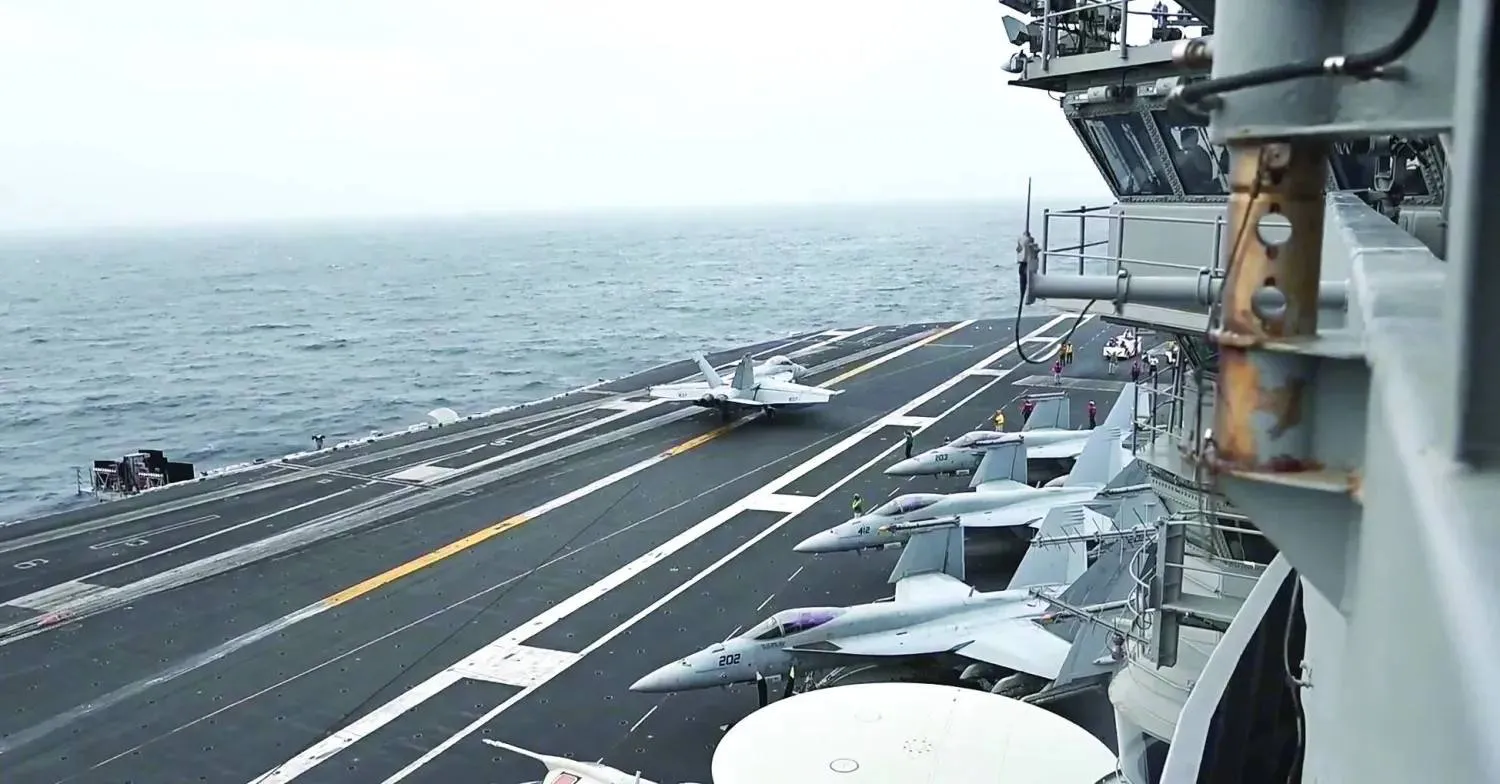
The aircraft carrier USS George Washington sails in Middle Eastern regional waters. (CENTCOM) 
TT

CENTCOM Tests Advanced Drone Capabilities in the Middle East

The aircraft carrier USS George Washington sails in Middle Eastern regional waters. (CENTCOM) 

The US Central Command (CENTCOM) said on Wednesday that Task Force 99, part of US Air Forces Central, introduced new drone and communication capabilities to warfighters in the Middle East.

“As a forward-deployed laboratory, the task force tests innovative concepts for enhancing combat effectiveness in the field,” the Command wrote in a post on X.

Late on Tuesday, CENTCOM had dismissed claims by Ali Azmayi, commander of Iran’s Revolutionary Guard Corps (IRGC) Navy, that Iran controls the Strait of Hormuz.

“[The] IRGC’s navy commander has no navy. American forces and regional partners clearly control the Strait of Hormuz,” the Command said, adding that US forces helped shipping partners move 19 million barrels of crude oil through the waterway.

Development of ‘Ballistic’

In Tehran, Iran’s defense minister nominee, Mehrdad Akhlaghi Ketabchi, outlined his plan for the ministry, prioritizing the upgrade of missile systems, expanding air defense production, and improving warhead effectiveness to meet current and future needs.

During a parliamentary session reviewing his plans for becoming defense minister, Akhlaghi Ketabchi said his priorities include “significantly and unexpectedly increasing the salaries of armed forces personnel.”

He also said: “We will work to accelerate the acquisition of technology for manufacturing heavy, multirole fighter jets, a project the ministry launched previously.”

Referring to ground combat, the nominee for the Defense post said that if he secures the confidence of deputies, his plan includes “developing the technology for designing and manufacturing artillery systems, missiles, and guided and smart mortar shells; modernizing production lines for advanced small arms; and developing and upgrading various anti-armor systems.”

Akhlaghi Ketabchi has been heavily involved in Iran's missiles programs and has previously served as head of the Aerospace Industries Organization, among other positions.

In 2007, he was designated by the UN Security Council in connection with his role as the head of the Shahid Bagheri Industrial Group (SBIG)—an entity subordinate to Iran's Aerospace Industries Organization (AIO), involved in the development and production of Iran's solid-propellant ballistic missiles.

His nomination depicts the pivotal role played by the Aerospace Industries Organization within Iran’s Defense Ministry.


Oil Prices Retreat as Investors Weigh Supply Outlook, Middle East Tensions

FILE PHOTO: Oil storage tanks and facilities of a Sinopec plant in Shanghai, China, March 26, 2026.  REUTERS/Go Nakamura/File Photo
FILE PHOTO: Oil storage tanks and facilities of a Sinopec plant in Shanghai, China, March 26, 2026. REUTERS/Go Nakamura/File Photo
TT

Oil Prices Retreat as Investors Weigh Supply Outlook, Middle East Tensions

FILE PHOTO: Oil storage tanks and facilities of a Sinopec plant in Shanghai, China, March 26, 2026.  REUTERS/Go Nakamura/File Photo
FILE PHOTO: Oil storage tanks and facilities of a Sinopec plant in Shanghai, China, March 26, 2026. REUTERS/Go Nakamura/File Photo

Oil prices fell more than 1% on Thursday as investors weighed risks to supply from attacks on shipping through the Strait of Hormuz against US efforts to cut petroleum shipping costs by easing sanctions on vessels.

Brent crude futures fell $1.64, or 1.6%, to $104.42 a barrel by 0337 GMT, while US West Texas Intermediate crude futures were down 98 cents, or 1%, to $94.11, reversing gains from the previous session.

WTI rose to a three-week high in the prior session after Iran said it was deploying new tactics to target ships in the Strait ‌of Hormuz and ‌keep oil prices high.

A container ship and a dry bulk ‌carrier ⁠both sank near ⁠the strait in the past 24 hours after being hit by projectiles in separate incidents, maritime officials said on Wednesday.

Attacks around the waterway have surged over the past 10 days, with Iran saying it is stepping up strikes in response to the US blockade of its ports and tougher sanctions introduced last month.

With the Iran war having disrupted shipping and driven up freight costs to record highs, the Trump administration is considering easing sanctions on so-called shadow-fleet vessels that have ⁠transported oil and petroleum products from countries including Russia, Iran and ‌Venezuela to help ease prices, a US official said ‌on Wednesday.

The new talks center on the United States potentially allowing "legal oil" to flow on previously sanctioned ‌vessels, the US official said.

Increased output from Russia and the Middle East has kept ‌a lid on prices. Russia's crude oil production rose by 65,000 barrels per day in September to 8.43 million bpd but remained down 870,000 bpd year over year, the International Energy Agency said on Wednesday.

The IEA also said crude oil exports from Middle East Gulf producers rose by 4.4 million bpd ‌in September to around 75% of prewar levels.

"While there is little concrete evidence of a near-term peace deal, oil continues to find ⁠its way to ⁠buyers through alternative routes and logistical arrangements," said Phillip Nova's head of market insights, Priyanka Sachdeva, in a client note.

"These workarounds have helped prevent a more severe supply shock, although they come at a higher cost and leave global flows vulnerable to further disruption."

In the US, crude oil and distillate inventories fell, while gasoline stocks rose last week, market sources said on Wednesday, citing data from the American Petroleum Institute.

Crude stocks fell by 11.1 million barrels in the week ended October 9, sources said. That was a much bigger draw than analysts polled by Reuters expected.

"Despite the sharp inventory draw, oil prices barely reacted. The failure to rise on bullish news suggests investors are cautious about chasing prices higher at current levels," said Haitong Futures in a note on Thursday.

Official numbers from the US Energy Information Administration are due at 12 p.m. EDT (1600 GMT), delayed by a day following the Columbus Day holiday on Monday.